
Motorsports Services
Corporate motorsport in Turkey: drift and advanced driving on a closed circuit, off-road, motorcycle and snowmobile safaris, and a school on a real race circuit.
Last updated:
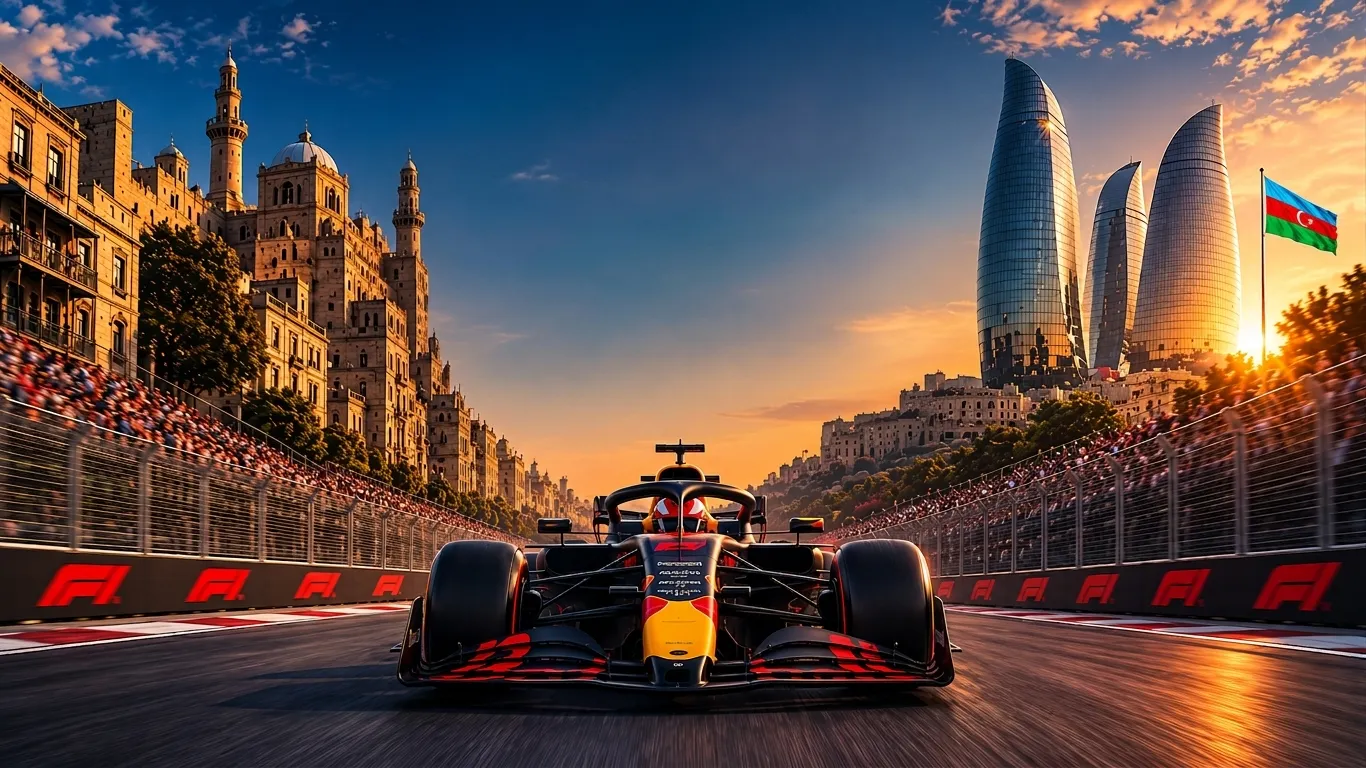
F1 Baku Corporate Tour - Formula 1 Azerbaijan Grand Prix
Designed for corporate incentive travel, the Formula 1 Azerbaijan Grand Prix 2026 Baku Tour includes...

Corporate Snowmobile Safari
A motorised tour on snow: no licence needed, a guided convoy, and a short winter activity that works...

Corporate Go-Kart and Karting Race
A timed circuit race: no licence required, producing a ranking that nobody can argue with.

Corporate Drift School
Controlled slide training: a driving licence is mandatory, an instructor sits beside you, and losing...

Corporate Motorcycle Safari
A convoy tour on off-road motorcycles: a short instructed warm-up, a guided route, and single-rider...

Corporate Race Track School
Corporate Race Track School corporate organization. Professional team, end-to-end service.
About Motorsports
Motorsport does two separate jobs in a corporate catalogue: on one side pure experience (safaris and convoy tours), on the other transferable skill (drift school, off-road, circuit training). Their participation conditions, risk and purchasing rationale differ — and choosing the right one starts with a question about driving licences.
Licences: the line that divides the list
This is the first and most often skipped step, and it matters more for an international group than a local one. A valid driving licence is mandatory for drift school and the race circuit school; employees without one cannot take part in the driving section. On an off-road course, participants without a licence take a full part in the spotter and support roles, which makes it markedly more inclusive. On snowmobile and ATV safaris on closed terrain, a licence is generally not required.
For colleagues travelling from abroad there is a practical consequence: they need to bring their licence with them, and some will not have thought to. Settle this when the participant list is prepared rather than on the morning, and plan a go-kart or simulator station the same day for anyone excluded.
The skill side: why it is not only entertainment
What is learned in a drift school is not a spectacle: which way to turn the wheel during a slide and how to use the throttle is the same situation a driver meets on a genuinely icy or wet road. At a race circuit school the focus is technique rather than speed — the cornering line, the braking point and where the driver looks. "The car goes where you look" is the rule participants find most surprising and the one that applies on a public road too. For sales, field and service teams who drive a great deal these carry both event and training value, and some companies build them into a defensive driving programme for fleet drivers — the framing that gets them approved as something other than a day out.
Off-road: driving is not a one-person job
What distinguishes an off-road course as a corporate event is the spotter role. On a difficult obstacle the driver cannot see where the wheels are going; a person outside the vehicle guides them with hand signals. That pair builds a real relationship of trust and communication, and role swapping means everyone experiences both sides. Hand signals need no shared language, so this works across a mixed-nationality team without any adaptation — which is rare among activities built on communication.
Safari formats and the participation threshold
Four-wheeled machines (ATV, buggy, snowmobile) require no balance and have a low participation threshold. A motorcycle must be balanced with the body, which raises the threshold markedly and makes a fall more likely than in the other motorsports. In mixed groups we recommend offering ATV in parallel — and for an international group whose riding experience you cannot survey in advance, plan that by default rather than as a contingency. All safaris run as a guided convoy rather than free riding, because ground and visibility conditions on snow and terrain change quickly.
Snow, for teams who have never seen it
The snowmobile safari is worth singling out. For colleagues based in the Gulf, North Africa or the warmer Mediterranean, snow is not a backdrop to the activity — it is the activity, and a machine nobody has driven before makes it a genuine first that asks no skill of anyone. Kartepe sits roughly 90 minutes from Istanbul, so a team already in the city for meetings can do this and be back the same evening.
Closed circuits and predictability
Closed circuits are unaffected by weather and can be used year round, which is why corporate groups prefer them. The one real constraint on a race circuit school is capacity: only a limited number of cars can be on track at once and each needs an instructor. Larger groups attend in sessions with a simulator or theory session in the paddock for those waiting. Because of this, booking must happen earlier than for other events — for a group travelling in on fixed dates, confirm it before the flights.
Who should not take part
Motorsport is not recommended for people with cardiovascular conditions, neck or back problems, or those who are pregnant; karts and terrain vehicles have stiff suspension and vibration from the surface is significant. A health declaration is taken beforehand and alcohol is strictly prohibited.
Frequently asked questions
Which programmes require a driving licence?
A valid licence is mandatory for drift school and the race circuit school. On an off-road course it is required for the driving section, but participants without one take a full part in the spotter and support roles. On snowmobile and ATV safaris on closed terrain it is generally not required. Colleagues travelling from abroad need to bring their licence with them.
What is arranged for employees without a licence?
On the off-road programme they take full part in the spotter and support roles. For drift and circuit programmes, a go-kart or simulator station is planned the same day. The distinction is settled when the participant list is prepared.
Can we take part with our own vehicles?
No. The programmes use vehicles prepared for the purpose, with a roll cage, secondary brake and appropriate tyres. Drift and terrain work is not done in personal vehicles; some circuits permit it, but corporate programmes use facility cars for equipment standard, insurance cover and instructor intervention.
Does it actually teach a useful skill?
Where you look, and steering and throttle use during a slide, transfer directly to real road conditions. A single session does not build a reflex, but it creates awareness and a basic response pattern. Some companies build it into a defensive driving programme for fleet drivers.
Is free riding possible?
Not in the safari formats. Tours run as a guided convoy with the guide at the front and a staff member at the back. Because ground and visibility conditions on snow and terrain change quickly, this arrangement is required for safety rather than preferred.
Motorcycle or ATV?
An ATV has four wheels and no balance problem; a motorcycle must be balanced with the body. That makes a motorcycle safari more demanding with a higher participation threshold, and a fall is more likely. In mixed groups we recommend offering both in parallel — and for an international group, planning the ATV option by default.
What group size does it suit?
6 to 60 for safari and off-road formats, with the operator's vehicle count as the constraint and larger groups attending in waves. Capacity is tighter for the race circuit school because every car needs an instructor, so booking must happen earlier.
Who should not take part?
Not recommended for people with cardiovascular conditions, neck or back problems, or those who are pregnant; the vehicles have stiff suspension and vibration from the surface is significant. A health declaration is taken beforehand and alcohol is strictly prohibited.