
Corporate Running Team: Setting Up a Company Running Team, Coaching and Team Marathon Entry
We set up a running team from your company that trains regularly, plan the coach, programme, kit and race calendar, and manage team entry to races in Turkey and abroad end to end.
A corporate running team is a permanent company team whose employees train regularly in level groups and prepare together for target races through the year. It differs from a one-off running event because it continues, and from running event organisation because the company prepares its people for a race rather than staging the race itself. We set up the team, plan the running coach and training programme, kit and race calendar, and run the coordination, travel and race-day logistics for team entry to the chosen races. We are now taking enquiries for the 2026–2027 season.
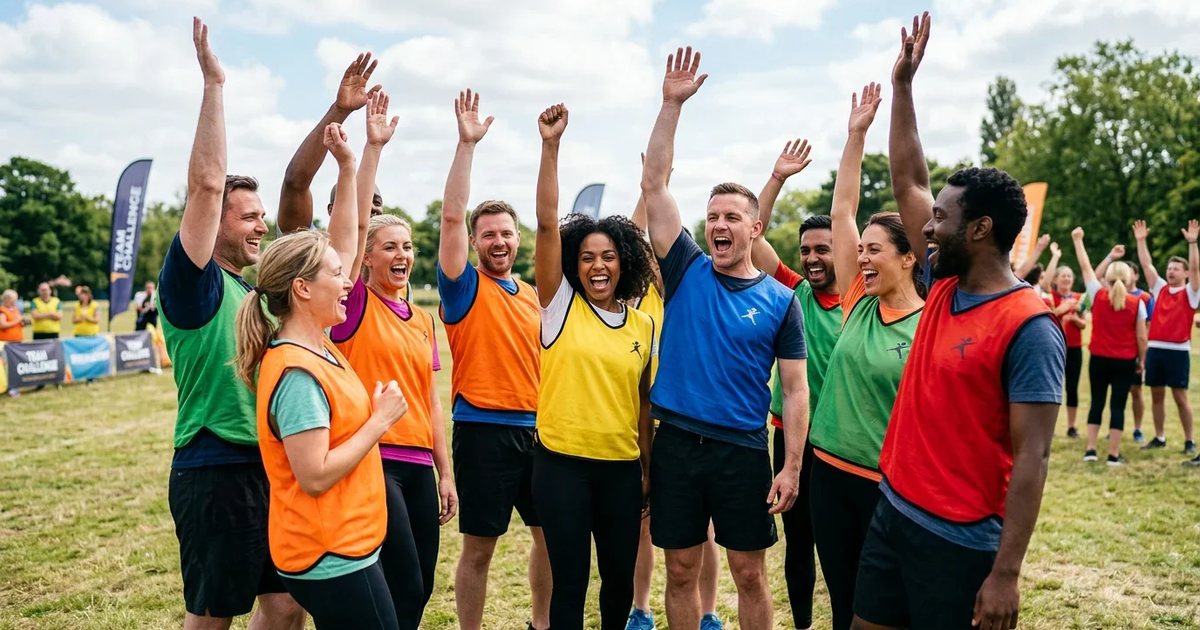
A corporate running team is a permanent company team whose employees train regularly in level groups and prepare together for target races through the year. It differs from a one-off running event because it continues, and from running event organisation because the company prepares its people for a race rather than staging the race itself. We set up the team, plan the running coach and training programme, kit and race calendar, and run the coordination, travel and race-day logistics for team entry to the chosen races. We are now taking enquiries for the 2026–2027 season.
Last updated:
What is a corporate running team and how do you set one up?
Short answer: A corporate running team (or company running team) is a team of a company’s employees who train regularly in level groups and prepare together for target races over a season. It has five elements: setting up the team, a coach and training programme, kit and equipment, a race calendar and team entry to races in Turkey and abroad. Because it can include everyone from complete beginners to people aiming for a marathon or an ultra trail, the same model works for a team of fifty and for a company with several thousand employees. It suits Turkish companies as well as international teams based in Turkey and foreign companies with staff here. We are now taking enquiries for the 2026–2027 season; teams targeting spring races need to start training in early winter.
This page is for companies that want to prepare their people for running. If you want to organise a public run, half marathon or marathon on behalf of your institution or brand, our marathon and running event organisation page is the right place to start. If you want to run the running team alongside football, volleyball or yoga groups under one roof, see our company sports club guide. A general overview of running as a corporate sport is on our corporate running page.
Why running? The most scalable team sport for companies
Running is one of the few team sports that needs no special skill, no pitch and no expensive equipment. A football team fits fifteen people and a volleyball team twelve; a running team fits everyone who is interested. In the same week, one group can be doing its first run–walk while another works at half-marathon pace. That flexibility makes running the easiest team sport for a company to grow. What the team gives the company falls under three headings:
- Employee engagement: Preparing for the same goal together over weeks connects people from different departments in a way a one-day event cannot. Two colleagues who meet in Monday’s meeting are also two teammates who finished the same long run.
- Measurable wellness: Attendance, training consistency and total distance are countable. HR can report the return on its wellness budget with this data rather than with estimates.
- A visible employer brand: A team running to the finish line in the same kit tells employees and the outside world something about the company’s culture that a long presentation cannot.
1. Setting up the team
A team starts not with an announcement but with a captain or team ambassador: one or more people inside the company who care about running and take on announcements, attendance tracking and welcoming newcomers. With several offices, each office gets an ambassador. A short survey then collects interest, current level and suitable days and times, and the team is split into level groups:
- Run–walk: People who have never run or are returning after a long break; they progress with walking and short running intervals.
- 5K and 10K: The broad base of the team; groups that can race for the first time after a short build-up.
- 21K (half marathon) and 42K (marathon): Regular runners ready for a longer preparation period.
- Trail: People who want to run in nature on paths and hilly terrain; a group that ranges from short trail races to ultra trail.
The launch goes out through internal channels together with a short taster run, and the date of the first session is in the announcement. Companies can add an option to involve families: partners joining weekend sessions, or short-distance and children’s categories at target races, so the team is supported at home too.
2. Running coach and training programme
A running coach for companies leads the team’s weekly group session and writes a separate training plan for each level group. The group session usually takes place once a week at a fixed day and time in a park near the office, on a seafront path or at a track; the other runs of the week are completed individually from the plan and the coach follows them remotely. Every session includes a warm-up and a stretching and injury-prevention block, and strength and mobility work is part of the programme. Every participant is advised to get medical clearance from a doctor before starting; for anyone aiming at a half marathon, marathon or ultra trail, this step should not be skipped.
The table below shows the phases of a 12–16 week half-marathon build-up. Weekly volume and paces are set by the coach for each participant’s starting level; the table shows the logic of the programme, not a prescription.
| Phase | Weeks (16-week plan) | Focus | Shape of the week |
|---|---|---|---|
| Base | 1–4 | A regular running habit, easy pace, technique and strength | One group session, two short easy runs, one strength and mobility session |
| Build | 5–9 | Gradually longer long runs, first tempo work | Tempo or hill work in the group session, a weekend long run |
| Race-specific | 10–13 | Sections at race pace, rehearsing race-day fuelling and kit | One quality session, a long run including race pace, recovery runs |
| Taper | 14–16 | Cutting volume to arrive at the race fresh | Short, lively runs, a team briefing, a race-week plan |
In a 12-week plan the base phase is shorter, so 12 weeks suits participants who already run regularly. In the same period, the run–walk group prepares for its first 5K.
3. Kit and equipment
The kit is the team’s identity. We design the team running kit and textiles with your company logo and team name and organise production: race singlet or shirt, training T-shirt and, if needed, a windbreaker and cap. Sizing is planned from the data collected at sign-up, with spare items set aside for new joiners. For autumn and winter training, reflective and winter gear (reflective vest, head torch, thermal layer) can be added to the team set. For running shoes we give guidance without recommending brands: what to look for given foot type, surface, weekly distance and race distance, with time to try and break them in written into the plan.
4. Race calendar
Road racing in Turkey has two main seasons: spring and autumn. Summer heat reduces city races and winter is the base-training period. The trail season opens in spring on low-lying and coastal courses, moves up to high mountain courses in summer and continues in autumn with ultra trails in regions such as Cappadocia. Major road races in Turkey, such as the city marathons in Istanbul and Antalya, and Europe’s big city marathons abroad also cluster in these two seasons. The team’s annual calendar follows this rhythm:
| Period | Target race type | Distance | Training starts |
|---|---|---|---|
| March–April | Spring city runs and half marathons | 10K, 21K | December–January |
| April–May | Europe’s big city marathons (spring window) | 42K | December (16–20 weeks out) |
| May–June | Trail season opens on coastal and mid-altitude courses | Short trail | February–March |
| July–August | High-altitude mountain trails; base period for the road team | Trail, ultra trail | March–April |
| September–October | Autumn road season, 29 October Republic Day runs, Europe’s autumn marathons | 5K, 10K, 21K, 42K | June–July |
| October–November | Autumn city marathons and major road races, ultra trails in regions such as Cappadocia | 10K to ultra trail | June–July |
| December–February | Rest, base training, short winter runs | 5K, 10K | Season planning happens now |
A good calendar gives every level group at least one goal a year: a 5K for the run–walk group, a 10K or half marathon for the main group, and a marathon or ultra trail for the advanced group. Choosing one “team race” where the whole team is in the same place on the same day becomes the shared moment of the season.
5. Team entry to races in Turkey and abroad
We manage team participation in races in Turkey and abroad end to end: choosing the target race, the registration timeline and coordination of the process, travel and accommodation, team kit, and race-day team logistics (meeting point, warm-up, bag drop, a team area after the finish). Registration is made through the race’s official registration channel; if the race offers corporate or team registration, the application is made together with your company through that official channel. We track when registration opens, guide team members through the process step by step and monitor whose registration is complete. Arrangements such as a team area after the finish are planned as far as the race’s rules allow. For races abroad, flights, transfers and hotels are handled with our DMC and travel team; if you want to turn a race into a reward trip, see our incentive travel page. For international teams coming to race in Turkey, see corporate sports events in Turkey for international teams.
Measurement and HR reporting
The team’s impact becomes visible through three data points kept across the season: attendance (how many people, from which departments, at how many sessions), distance (total and per group) and training consistency (how many people are still following the plan after the first month). This data goes to HR as periodic and end-of-season reports and can be linked to the company’s corporate wellness programme. Participation is voluntary; app or watch data is used only with the participant’s explicit consent, personal data is processed in line with Turkish data protection law (KVKK), and HR receives aggregated results, not individual health data. We describe our approach in how to measure the return on a corporate sports event; to include employees who do not run, a company step challenge can run alongside the team.
If you want to stage your own race
As the team grows, some companies take the next step: staging their own race or brand run for employees, families and stakeholders. That is a different job from team entry; it needs course design, permit follow-up, chip timing, a participant registration system and a medical team. For that, see our marathon and running event organisation page and our step-by-step guide how to organise a public run. City runs and ultra trail formats for municipalities and public institutions are on our municipal and public-sector sports events page.
Level and goal selector
A corporate running team is built on level groups rather than a single goal. Each participant picks the goal that fits their starting level; the run–walk group and the marathon group can train in the same team.
| Level / goal | Preparation time | Weekly training | Best for |
|---|---|---|---|
| Beginner: run–walk | 6–8 weeks | 2–3 short sessions; one is the group session | Employees who have never run or are returning after a long break |
| 5K | 8–10 weeks | 3 sessions; one is the group session | The broad base of the team; people running their first race |
| 10K | 10–12 weeks | 3–4 sessions; group session and a weekend long run | People who have run regularly for a while and have finished a 5K |
| Half marathon (21K) | 12–16 weeks | 4 sessions; quality session, long run, strength | Runners comfortable at 10K who can commit to a longer build-up |
| Marathon (42K) | 16–20 weeks | 4–5 sessions; a growing long run and a recovery plan | Regular runners with half-marathon experience |
| Trail / ultra trail | 12–24 weeks depending on distance | 4–5 sessions; hill, trail and strength work | Experienced runners who want to run in nature; ultra trail requires long-distance experience |
Timings depend on starting level; the coach confirms each participant’s group after an initial assessment. Medical clearance from a doctor is advised before starting.
What setting up a corporate running team includes
Team set-up and launch
Interest and level survey, internal announcement, taster run and team name, with the date of the first session fixed from the start.
Captain and team ambassadors
A captain from inside the company and an ambassador in each office; attendance tracking, welcoming newcomers and communication templates.
Level groups
Run–walk, 5K, 10K, half marathon, marathon and trail groups, each with its own goal and plan.
Running coach
A coach who leads the weekly group session and writes level-based plans; warm-up, technique and injury prevention.
Training programme and remote follow-up
A phased build-up plan, remote follow-up of individual runs and plan updates; medical clearance advised before starting.
Training spot and fixed calendar
A fixed day and time in a park near the office, on a seafront path or at a track, with a bad-weather alternative.
Team kit and textiles
Design and production of a branded race kit and training T-shirt, sizing and spares for new joiners.
Reflective and winter gear
Reflective vests, head torches and thermal layers for autumn and winter training.
Shoe and equipment guidance
Brand-neutral shoe guidance, break-in time, and race-day kit and fuelling rehearsal.
Annual race calendar
A target race for each level group, built around the spring and autumn road seasons, trail seasons and big city marathons abroad.
Team race entry
Target race selection, registration timeline and coordination (registration via the official channel), travel, accommodation and race-day team logistics.
Measurement and HR report
Periodic and end-of-season reports on attendance, distance and training consistency; voluntary participation and KVKK-compliant data handling.
How the quote takes shape
The cost of a corporate running team depends on team size, coaching frequency, programme length and target races, which is why there are no prices on this page. The quote is settled in three steps.
Team and goals
An estimated headcount, cities and office locations, the spread of levels and the season’s target races (in Turkey, abroad, trail) set the frame for the team.
Programme and calendar
Group session frequency, programme length, training spots and the annual race calendar, plus kit and equipment needs and reporting expectations.
Scope and quote
Coaching, kit, equipment, race entry coordination, travel and accommodation lines are chosen one by one; the quote shows fixed and per-person lines separately and arrives within 24 hours in TRY, USD or EUR.
What drives the quote
When comparing running team quotes, check that each of these lines is itemised. Instead of figures, we show what changes the cost and why; our quote lists the same lines one by one.
| Line | What it covers | Effect on the quote |
|---|---|---|
| Team size | Number of participants, number of level groups and office locations. | Sets the number of groups and coaches, kit quantities and reporting scope; a team across several cities means separate training spots. |
| Coaching hours and frequency | Number of weekly group sessions and intensity of remote follow-up. | The main multiplier; the gap between one and two group sessions a week grows over a season. |
| Programme length | Preparation for one target race or a year-round team. | Short programmes focus on one goal; a year-round team covers several build-up and rest periods. |
| Kit and equipment quantities | Race kit, training T-shirt, windbreaker, reflective and winter gear. | Varies with quantity, product range and printing method; made once and used for several seasons, with spares for new joiners. |
| Number and type of races | Target races in the season: road, trail or ultra trail. | Each race means its own coordination and race-day logistics; entry fees are set by the race’s official channel and shown separately. |
| Travel in Turkey and abroad | Flights, coach or transfers for out-of-town and international races. | Depends on destination, team size and season; big city marathon weekends need early planning. |
| Accommodation | Nights before and after the race, hotel location. | Proximity to the start and race-week demand affect the cost; rooms are planned separately when families travel. |
| Race-day logistics | Meeting point, warm-up, bag drop, team area after the finish, local transport. | Varies with team size and with what the race’s rules allow. |
| Measurement and reporting | Tracking attendance, distance and consistency; periodic and end-of-season HR reports. | Usually a small line; reported jointly when combined with a wellness programme. |
Race entry fees are set and paid through the race’s official registration channel and are shown separately from coordination lines. Quotes can be issued in TRY, USD or EUR.
Programmes planned alongside the running team
The programmes below can be set up as part of a corporate running team or on their own: a weekly company running club, team preparation for an official half marathon, and company runs that can become the team’s shared goal for the season.

Setting Up a Company Running Club
A running club built on continuity rather than a target race: a fixed weekly meeting, level groups and a club...

Corporate Half Marathon Team Training
A 12-week race preparation: a weekly training plan, group runs, and running a target half marathon together as...

Republic Day Corporate Run (29 October)
A corporate run themed around Republic Day: a short distance, high participation and a flag-themed visual setu...

A corporate running event that opens the season: 5K and 10K lanes, timed results, and a walking lane open to e...
Frequently Asked Questions
How many people do you need for a corporate running team?
Can employees who have never run join?
Can you register our team for the marathon in Istanbul?
Can we enter a marathon abroad as a team?
How often does the running coach come?
Where does the team train?
Can we set up a corporate ultra trail team?
What does the kit include?
How do you report the team’s impact to HR?
Can families be involved?
What is the difference between a corporate running team and organising a company run?
When should we start for the 2026–2027 season?
Read before you decide
Half Marathon Training Plan for Beginners: A 16-Week Programme
A 16-week half marathon training plan for beginners: base, build, specific and taper phases, a weekly structure, prepari...
How to Measure the Return on a Corporate Sports Event: 6 Concrete Metrics
Six measurable indicators that answer "did the event work?", each with how to collect it and when to look.
How to Organise a Public Run or Marathon: Permits, Course and a 16-Week Plan
Organising a public run or marathon as a municipality, public body or brand? Choosing the format and distance, course pr...
Get a tailored proposal within 24 hours
Share your headcount and approximate date; we will come back with the format and budget range that fit, within the same business day.
Get a Free Quote