
Company Olympics and Corporate Sports Day
Many sports in one day: everyone is good at at least one thing, and departments compete on points.
A five-a-side tournament calls the football players; a bowling tournament calls the bowlers. Company olympics work on a different logic: 6–12 stations, a different skill at each, and a scoreboard on which every department collects points from every station. Whoever cannot run does archery, whoever dislikes archery throws darts, whoever wants neither runs the scoring table — and at the end of the day one champion department emerges.
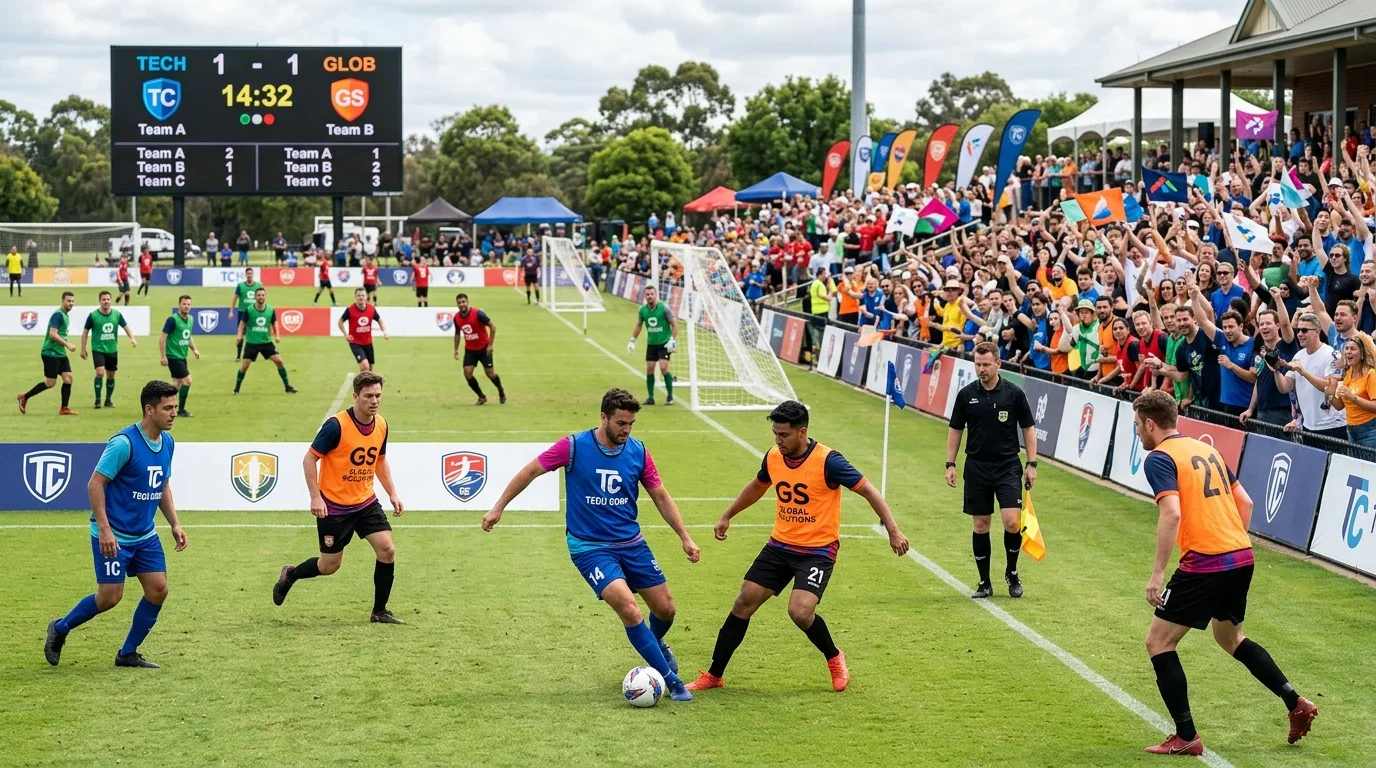
A five-a-side tournament calls the football players; a bowling tournament calls the bowlers. Company olympics work on a different logic: 6–12 stations, a different skill at each, and a scoreboard on which every department collects points from every station. Whoever cannot run does archery, whoever dislikes archery throws darts, whoever wants neither runs the scoring table — and at the end of the day one champion department emerges.
Last updated:
What the olympics format solves
The known problem with single-sport events is the attendance curve: those who like the sport come, those who do not find an excuse, and the event is held with "the same 30 people as always". The olympics format reverses that curve because stations are deliberately spread across different skills: strength (tug of war), coordination (archery, darts), speed (relay), strategy (giant chess, boules), team (volleyball, dodgeball) and luck (dice games). Nobody is good at all of them; everyone is good at one.
The second thing it solves is department belonging. The scoreboard is kept per department and visible all day; natural divides — sales vs operations, plant vs office, headquarters vs field, or the Turkish subsidiary vs a visiting regional team — become sporting rivalry for a day. At factories and production sites teams are built by shift; in groups of companies, by company.
In the family version, children's stations (a mini olympics) run in parallel with the adult stations and a child's points go to the parent's department — a small rule that visibly raises attendance at family days. Briefings, announcements and rules are given in English and Turkish for mixed groups.
What the olympics day includes
Station design
6–12 stations by headcount and profile; strength, coordination, speed, strategy, team and luck stations balanced. Every station has an easier alternative.
Department teams and rotation
Teams by department or shift; a rotation plan takes every team through every station with no queues.
Scoreboard
A 1–3–5 point system per station, a board visible all day, a "double points" final station keeping the excitement to the end.
Opening and closing ceremony
A parade with department flags, a (humorous) olympic oath, medal ceremony and champion's cup; photo and video pack.
Family and children's stations
Mini olympics: separate stations for ages 4–12, an entertainer, children's points credited to the parent's department.
Venue, equipment, setup
Factory grounds, hotel garden, sports facility or open field; all station equipment, shade, sound system and scoreboard set up in the morning.
Moderator and station leaders
A lead moderator announces the flow; a game leader at every station enforces the rules and reports points.
Medical, insurance, weather plan
Medical staff on site, a heat protocol (water points, shade breaks), an indoor scenario for rain and a decision time.
How the quote takes shape
What drives the cost of a company olympics is not the number of sports but the number of stations and people. The quote is settled in three steps; figures cannot be given without those three inputs, which is why there are no prices on this page.
Headcount and profile
Total participants, whether families join, age and fitness spread, shift or department structure. This sets the station count and rotation.
Venue and date
Your own grounds or a facility; city; date and backup date. A site survey confirms which stations can be built.
Scope decision
Ceremony and medals, catering, transfers, photo and video, children's entertainer — each chosen individually; the quote shows fixed and per-head lines separately and states what it does not include.
Programmes that make up an olympics day
Each programme below is an event in its own right; on an olympics day they come together as stations. Which stations are chosen follows the team's profile.

Company Opening Sports Festival
A sports festival for the opening of a new office, plant or branch: a mix of guests and employees, built aroun...

Company Family Day Sports Festival
A day for employees and their families together: parallel stations by age group, a children's area and a low-c...

Employees' Children Sports Day
A sports day for employees' children only: coached stations by age group, in a safe structure with parents pre...

A multi-sport tournament on sand: beach volleyball, beach football, tug of war and relays, with teams ranked o...
Frequently Asked Questions
How many people does a company olympics need?
Which sports are included?
What do employees who do not play sport do?
How long does it last?
Can families take part?
What if it rains?
Read before you decide
How to Design an Employee Sports Day for Factories and Production Sites
Shift patterns, physical workload and family participation. A sports day at a production site is designed completely dif...
How do you organise an internal company sports tournament? Goals, format, sports, team rules, fixture maths, venue, refe...
Bad Weather, Cancellation and Backup Dates: A Corporate Event Risk Plan
For an outdoor event, rain is not a risk but a variable to be planned for. How the decision gets made, when, and by whom...
Get a tailored proposal within 24 hours
Share your headcount and approximate date; we will come back with the format and budget range that fit, within the same business day.
Get a Free Quote