
Marathon and Running Event Organisation in Turkey: In-House Runs, City Runs, Half Marathon, Marathon and Ultra Trail
In-house and brand runs for companies; city runs, public runs, half marathons, marathons and ultra trails on nature courses for municipalities and public institutions. We plan and deliver them under a single contract, from course design to the award ceremony.
A public run is less a sports event than a city operation: the course, road closures, permits, registration, timing, medical cover and security all have to work at the same time on the same day. We set the scope for each event and deliver specialist lines such as timing and the medical team with specialist crews and partners under a single contract. The institution deals with one point of contact, and every line is visible in the quote.
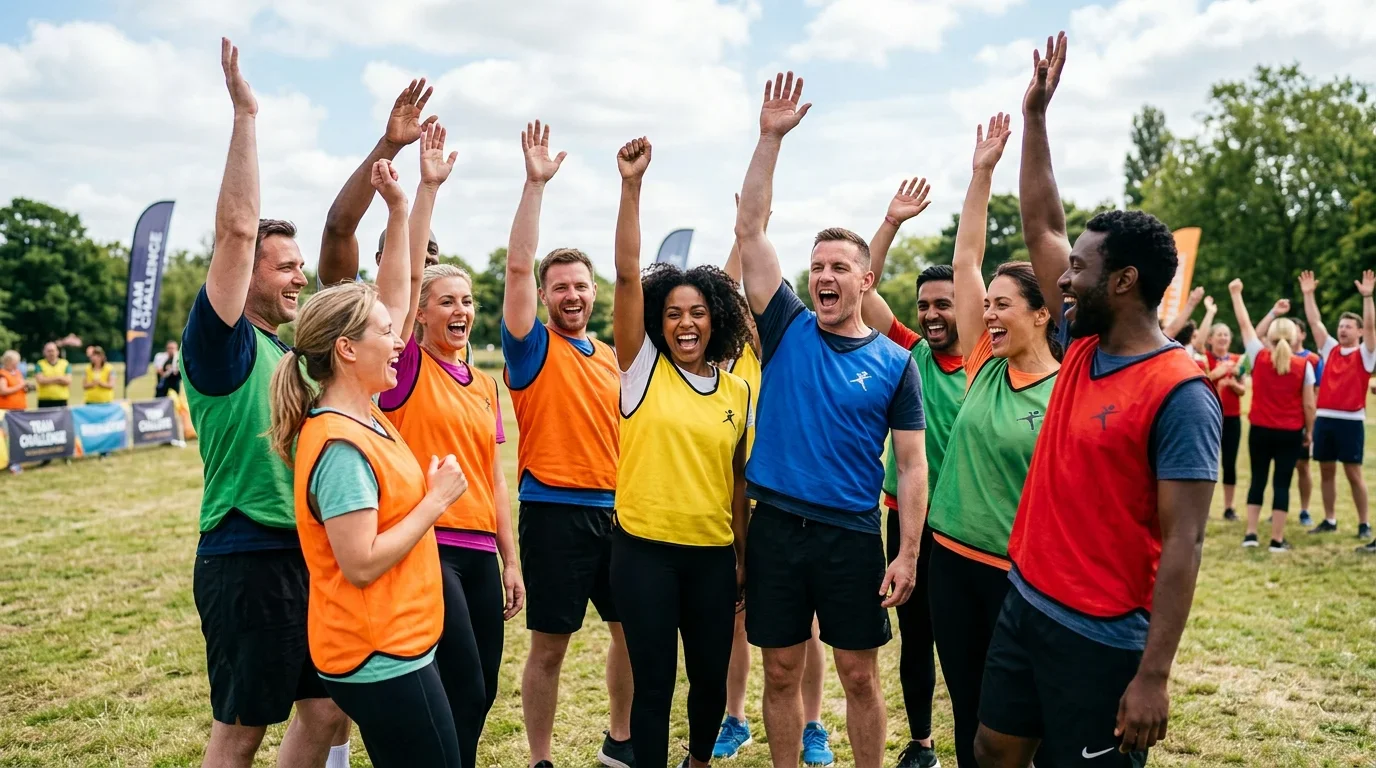
A public run is less a sports event than a city operation: the course, road closures, permits, registration, timing, medical cover and security all have to work at the same time on the same day. We set the scope for each event and deliver specialist lines such as timing and the medical team with specialist crews and partners under a single contract. The institution deals with one point of contact, and every line is visible in the quote.
Last updated:
How does marathon and running event organisation work?
Short answer: Organising a marathon or public run is an operation that covers course design and measurement, road closures and a traffic plan, permit follow-up, online registration, race kits and medals, bib numbers and chip timing, water and medical points, security and volunteer coordination, and the start–finish set-up. For institutions, planning should start roughly 12–16 weeks before race day, depending on the format. Kurumsal Sporlar delivers these lines on the institution’s behalf under a single contract; permits and official approvals rest with the institution and the relevant authorities, while we track the process and help prepare the paperwork.
This page is for municipalities, public institutions (governorships, district governorships, universities, provincial sports directorates and similar bodies) and brands that organise a race for the public or a wide audience. If you want to build a team of employees who train regularly, or take your team to races in Turkey and abroad, our corporate running team page is the better starting point; all corporate running formats are on our corporate running page. If the run is part of a festival, see sports festival organisation; for all public-sector formats, see municipal and public sports events.
Who it is for: companies and public institutions
Demand for running events comes from two main sources. Companies no longer just send participants to races organised by others; they are becoming organisers themselves: an in-house run for employees and their families, or a public brand run tied to the company’s anniversary or a product launch. In an in-house run the aim is to prepare for a shared goal together and build ties between departments; in a brand run, the brand’s name is linked to a city event and the participant experience speaks for the brand itself.
Municipalities and public institutions see running as a tool for promoting the city and for public health: a city run in the city centre, a half marathon and marathon on a measured course, and ultra trails across nature courses in rural and mountainous areas. The structure we set up is the same for both: we define the scope together, deliver specialist lines with specialist crews and partners under a single contract, and give the institution a single point of contact.
All the institution has to do: set the goal
The key decision an institution makes in a running event is what the race is for: employee engagement, promoting the city, brand visibility or public health? Once the goal is clear, format, distance, date and participant profile follow from it. We take on the rest end to end:
- Course design: route, distance measurement, gradient and surface checks, and reconnaissance and marking on nature courses.
- Permit follow-up: list and timeline of required applications and support with paperwork; approval rests with the institution and the relevant authorities.
- Chip timing: bib numbers, chip pairing, split-point readings and live results.
- Participant registration system: online registration page, categories, capacity, confirmation emails and kit collection.
- Transport and accommodation: transfers for participants, elite athletes and officials, a hotel room block and race-week logistics.
- Medical team: medical points along the course, a finish medical area, ambulance and a hospital referral plan.
Each of these lines is detailed in the scope table below and appears as a separate line in the quote.
Which race format? A comparison
| Format | Event duration | Target audience | Critical items |
|---|---|---|---|
| Public run / fun run (5–10 km) | Half a day | Participants of all ages and levels, families | Short road closures, managing a crowded start, simple registration, plenty of water and shade |
| City run (usually 10 km plus a shorter distance) | Half a day | City residents, visiting runners, families | Historic and scenic route, spectator areas, road closures in the city centre, promotion and broadcast plan |
| Half marathon (21.1 km) | Half a day; course closure depends on the cut-off time | Regular, trained runners | Measured course, chip timing, evenly spaced water and medical points, longer road closures |
| Marathon (42.195 km) | A full day | Experienced runners, often alongside shorter-distance categories | A long, multi-point traffic plan, phased road reopening, a wide medical network, cut-off time and sweep vehicle |
| Ultra trail (beyond 42.195 km or a long course with significant elevation in nature) | One or several days; may include night sections | Experienced trail runners, alongside a short trail category | Course reconnaissance and marking, aid stations and checkpoints, mandatory kit, cut-off times, mountain and search-and-rescue coordination, natural-area permits |
| Children’s race | A few hours, with separate starts by age group | School-age children and their families | A short, closed course, a parent pick-up area, distances by age group, extra marshals |
| Night / themed run | Evening; a few hours | Younger participants, social runners | Course lighting, reflective kit, stage and sound, theme stations, communication with local residents |
| Sponsored brand run | Half or full day, depending on the format | The brand’s audience, the general public | A brand visibility plan, kit and medal design, an experience area, clear consent wording on the use of registration data |
| Commemorative / national holiday run | Half a day | The general public, students, staff of the institution | Ceremony running order and protocol, early permit applications because the date is fixed, a weather plan B |
City runs
A city run is held in the city centre, and its main purpose is to promote the city. The route is usually drawn past historic buildings, squares, the waterfront or the city’s landmarks, so runners see the city as they race and the photos and broadcast footage become the city’s postcard. Course design for a city run is therefore more than measuring distance: the visual value of the route, the areas where spectators can watch, proximity to public transport and the impact of road closures on city life are assessed together.
The participant experience is at the heart of a city run. A race village where kits are collected, waiting and activity areas for families at the start–finish, music and cheering points along the course, and an area showcasing local food at the finish bring the race close to a city festival. The format usually combines a 10 km race with a shorter distance everyone can join, and it is a good starting point for cities that want to grow into a half marathon later. If you wish, we can also build the race into a sports festival programme.
Ultra trail organisation
Ultra trails are races beyond 42.195 km, or long courses with significant elevation in nature. Unlike a road marathon, most of the course runs on paths, forest tracks and mountain ridges; a race can last hours or even days, and runners may spend part of the night on the course. An ultra trail is therefore less a road race than an outdoor operation, and the weight of planning shifts towards safety.
- Course reconnaissance and marking: the route is walked and run, and the distance and elevation profile are mapped; marking is done so it can be seen at night, and all markers are collected after the race.
- Aid stations and checkpoints: points for water, food, medical cover and passage control are placed according to the difficulty of the course; on long courses some become rest and drop-bag areas.
- Mandatory kit list: items such as a head torch, thermal blanket, waterproof jacket, water capacity and a whistle are set by course and season and checked before the start.
- Cut-off times: cut-off times and a sweeper team are planned so that runners who cannot reach certain points by a set time are safely taken off the course.
- Night sections: lighting, reflective marking, checkpoint density and the communication plan are strengthened on sections run at night.
- Mountain, search-and-rescue and medical coordination: a response and evacuation plan for hard-to-reach points is set up with specialist crews and partners; coordination with the competent authorities runs through the institution.
- Forest and natural-area permits: we draw up the list and timeline of required applications for the areas the course crosses and follow the process; approval rests with the relevant authorities.
- Environment and leave no trace: cupless aid stations, waste collection points, a stay-on-course rule and post-race clean-up are written into the plan from the outset.
- Multiple distance categories: short trail, mid-distance and ultra categories can be planned for the same weekend, so newcomers can take part too.
In regions with a strong natural and cultural fabric, such as Cappadocia, an ultra trail can become a promotional tool that puts the region on the calendars of runners from Turkey and abroad. For our corporate event experience in the region, see Cappadocia corporate event organisation.
Scope: what does each line include?
| Line | What it includes | Note |
|---|---|---|
| Course design and measurement | Route proposal, distance measurement, turnaround points, gradient and surface checks, course map | The route is assessed together with traffic, public transport and spectator access |
| Road closures and traffic plan | Roads to be closed, closing and reopening times, diversions, barrier and signage points | Finalised with the institution and the relevant authorities; implementation depends on their approval |
| Permit follow-up | List and timeline of required applications, support with paperwork and follow-up | Permits and approvals rest with the institution and the relevant authorities; requirements vary by city |
| Registration system | Online registration page, categories, capacity, confirmation emails, participant list | Paid, free or charity model; personal data and consent wording agreed with the institution |
| Kit, T-shirts and medals | Design and production of T-shirts, medals and kit bags; kit collection day and venue | Size split planned from registration data; sponsor logos can be included in the design |
| Bib numbers and chip timing | Bib printing, chip pairing, start, finish and split-point readers | Delivered with a specialist timing crew and partners |
| Live results | Online results page, category rankings, results list | Award ceremony rankings are taken from the timing data |
| Water and aid stations | Water and, where needed, isotonic drinks and fruit; station equipment, waste collection | Spacing planned according to distance and temperature |
| Medical points and ambulance | Medical points along the course, a finish medical area, ambulance positioning | Delivered with a specialist medical team and partners; the hospital referral plan is written in advance |
| Security and volunteer coordination | Course marshals, junction points, volunteer recruitment, briefing and task allocation | Coordination with public security units runs through the institution |
| Start–finish set-up | Start and finish arches, barriered funnels, holding areas, bag drop and toilets | Wave starts can be planned for a crowded start |
| Stage and sound | Stage, PA system, host, warm-up and announcement running order | Lighting is added to this line for night runs |
| Award ceremony | Category prizes, trophies and plaques, protocol running order | Ceremony time is set by the last category’s finish |
| Transport and accommodation | Transfers for participants, elite athletes and officials; start and finish shuttles; a hotel room block and race-week logistics | Comes to the fore in races with many visiting participants and in ultra trails on nature courses |
Timeline: from T-16 weeks to T+1
| When | What happens |
|---|---|
| T-16 weeks | Decide format, distance, date and audience; draft route; budget and the institution’s procurement model (tender, direct procurement, sponsored) |
| T-12 weeks | Measure and finalise the course; set a timeline for permit applications; sponsor talks; build the registration page |
| T-8 weeks | Open registration and announce; draft traffic plan; finalise medical and timing plans; order kits, T-shirts and medals |
| T-4 weeks | Recruit and brief volunteers; position aid and medical points; communicate with local residents and businesses |
| T-1 week | Close registration; pair bibs and chips; kit collection; final coordination meeting and weather check |
| Race day | Set-up, course check, start, aid stations, live results, award ceremony, dismantling and reopening roads |
| T+1 | Final results, thank-you email to participants, photos, closing report to the institution |
How can public bodies and brands work with us?
- Through a tender (EKAP): We can bid in tenders opened by the institution.
- Through direct procurement: Where the institution’s regulations allow, we can work under direct procurement.
- Through a sponsored model: The event is funded by a brand or sponsor; the institution hosts it and we run the organisation. We organise brands’ own races with the same structure.
In every model, permits and official approvals rest with the institution and the relevant authorities; we track the process and help prepare the required paperwork.
What do running events bring to a city?
A race leaves an impact far longer than the few hours of race day. Runners rarely come alone: they bring family, friends or teammates. They stay for one or several nights, eat in the city’s restaurants, explore the city between kit collection and the race, and leave with a date in mind for next year. A race held on the same date every year promotes the city again on that date every year.
A well-timed race can help fill hotels outside the peak season; races placed in the spring and autumn calendar are especially valuable in this respect. For Anatolia’s nature courses the effect is even clearer: ultra trail and trail races put valleys, highland plateaus and mountain ridges that were once known only to local hikers on the radar of runners from Turkey and abroad. This is the main reason public institutions and municipalities are turning to this field: running is a scalable promotion and tourism tool for a city and a region.
For this impact to happen, the experience beyond the race needs planning too. For participants coming to the race and the visitors who accompany them, we can also take on a hotel room block, airport and hotel transfers and post-race city tours; details of these services across Turkey are on our Turkey DMC services page.
What we need for a quote
- Name of the institution or brand and the procurement model (tender, direct procurement, sponsored)
- City, district and the intended start–finish area
- Format and distances (e.g. a 5 km public run plus a 10 km race, a half marathon, a children’s race)
- Target date and an alternative date
- Expected number of participants and categories (age groups, para categories)
- Registration model: paid, free or charity
- Required lines: timing, kits, T-shirts, medals, stage, award ceremony
- Sponsor and brand visibility expectations
For a step-by-step walk-through of the planning, see our guide on how to organise a public run; for weather and cancellation scenarios, see our event risk plan article. To add a children’s course or experience areas around the race, see sports area and course installation.
Races for companies and institutions: in-house runs
We organise races not only as public events but also as an in-house run exclusively for the staff of your company or public institution: a closed run for employees and their families, a team ranking between departments or companies, or a themed run tied to an anniversary or a national day. Participants are grouped into age and gender categories, with results announced overall and by category; a team category and a relay can be added on request.
We plan every distance, from a 3–5 km fun run to 5K and 10K, the half marathon (21.0975 km), the marathon (42.195 km) and trail running on natural paths. If you would rather prepare your team for an official marathon, see our corporate half marathon team programme; to build a permanent team that trains regularly, see our corporate running team page.
Now taking enquiries for the 2026–2027 season
We are collecting enquiries for the new season under two headings:
- Corporate running team: setting up the team, a running coach and training programme, team kit and equipment, a race calendar, and team participation in races in Turkey and abroad. Details are on our corporate running team page.
- Running event organisation: in-house runs, city runs, half marathons, marathons and ultra trails for companies, municipalities and public institutions; the full scope described on this page.
Lead time sets the calendar: we recommend at least 12 weeks for a public run and at least 16 weeks for a half marathon or marathon. Ultra trails need an earlier start because of course reconnaissance, marking and natural-area permits. Institutions looking at spring and autumn dates should send their enquiry now to leave breathing room for permits and sponsors. You can send your enquiry through our quote form.
Distance and format selector
Choose the distance by participant profile: a short distance and a walking category if you want everyone to take part; a half marathon, marathon or trail race for experienced runners.
| Format | Distance | Best for | Note |
|---|---|---|---|
| Fun run and walk | 3–5 km | All employees and their families | No time pressure; the most inclusive format for company races |
| 5K | 5 km | Wide participation, including non-runners | Achievable with short preparation; pairs with a children’s run |
| 10K | 10 km | Regular runners | The most common race distance for corporate runs |
| Half marathon | 21.0975 km | Prepared runners | Needs weeks of training; a more extensive course and traffic plan |
| Marathon | 42.195 km | Experienced runners | The most extensive road closure, medical and water-station plan |
| City run | Usually 10 km plus a shorter distance | City residents, visiting runners and families | Historic and scenic route, spectator areas; focused on promoting the city |
| Trail running (short and mid-distance) | Depends on the course (short and mid-distance trail) | Runners who want to run in nature | Trail marking, checkpoints, elevation gain and permits for natural areas |
| Ultra trail | Beyond 42.195 km or a long course with significant elevation in nature | Experienced trail runners | Aid stations and checkpoints, mandatory kit, cut-off times, night sections and search-and-rescue coordination |
| Relay (team) | Total distance split between team members | Department or inter-company teams | A team format where everyone runs a short leg |
Several distances can share one start–finish area in the same event (for example 5K + 10K + a children’s run).
What running event organisation includes
Course design and measurement
Route proposal, distance measurement, turnaround points, surface and gradient checks; a course map that takes spectator and public transport access into account.
Road closures and traffic plan
Closing and reopening times, diversions, barrier and signage points; an implementation plan finalised with the institution and the relevant authorities.
Permit follow-up
A list and timeline of the required applications, support with paperwork and follow-up. Approval rests with the institution and the relevant authorities.
Registration, kits and medals
Online registration, categories and capacity; T-shirt, medal and kit bag production; kit collection day.
Chip timing and live results
Bib numbers, chip pairing, split-point readings and live online results, delivered with a specialist timing crew and partners.
Water, medical cover and ambulance
Water and aid stations, medical points along the course, a finish medical area and ambulance, delivered with a specialist medical team and partners.
Security and volunteers
Course marshals, junction points, volunteer recruitment, briefing and task allocation; coordination with security units.
Start–finish, stage and ceremony
Start and finish arches, barriered funnels, stage and sound, a host, warm-up running order and the category award ceremony.
Age and gender categories
Participants are grouped by gender and by age band (for example 18–29, 30–39, 40–49, 50–59 and 60+, in 5- or 10-year bands to suit the institution and headcount). Results, podiums and medals are published overall and per category.
In-house runs
Closed in-house runs for employees and their families, team rankings between departments or institutions, and themed runs tied to anniversaries or national days, with the option of a public brand run.
Ultra trail organisation
Course reconnaissance and marking that is visible at night, aid stations and checkpoints, mandatory kit checks, cut-off times and a sweeper team; mountain, search-and-rescue and medical coordination with specialist crews and partners. Short trail and ultra categories can be planned together.
Transport and accommodation
Transfers for participants, elite athletes and officials, start and finish shuttles, a hotel room block; city tours and race-week logistics for visiting runners and guests.
Trail running
Course design on natural paths, trail marking, checkpoints and a sweeper at the back, a mandatory kit list where needed, and follow-up of permits for forest and natural areas with the relevant authorities.
Team and relay categories
Team rankings based on members’ times, and relay formats where the total distance is split into legs.
How the quote takes shape
The cost of a race depends on the distance, the number of participants, how long roads are closed and which lines are required, which is why there are no prices on this page. The quote is settled in three steps.
Format and date
City, format, distances, target date, expected number of participants and the institution’s procurement model (tender, direct procurement or sponsored) set the framework.
Course and scope
Draft route, road closure needs, permit timeline and the lines required (registration, timing, kits, medical, security, stage) are chosen one by one.
Itemised quote
Fixed lines and lines that vary with participant numbers are shown separately; the quote arrives within 24 hours in TRY, USD or EUR.
What drives the budget
When comparing race quotes, check that each of these lines is itemised. Instead of figures, we show what changes the cost and why; our quote lists the same lines one by one.
| Line | What it covers | Effect on the budget |
|---|---|---|
| Format and distance | Public run, half marathon, marathon or several categories. | Longer distances mean more course, aid stations, medical points and marshals; several categories mean extra starts and timing plans. |
| Number of participants | Registration capacity and the split between categories. | Sets the number of kits, T-shirts, medals, bibs and chips and the size of the start area and aid stations; the event scales with participant numbers. |
| Course type (city / nature / ultra) | A paved city course, a nature course or a long-distance ultra trail. | On a city course, road closures and barriers drive the cost; on nature and ultra courses, reconnaissance, marking, aid-station logistics, search and rescue and night safety do. |
| Course and road closures | Where the route runs in the city and how long it is closed. | More closed junctions and roads mean more barriers, signage and marshals; a closed-circuit or park course reduces this line. |
| Registration model and kit | Paid, free or charity model; kit contents. | Kit contents and printing method directly affect cost; in a paid model, entry fees can cover part of the budget. |
| Timing | Chip timing, split points, live results. | Varies with the number of split points and categories; fun-focused public runs can use simpler timing. |
| Medical cover and security | Medical points, ambulance, security staff and volunteers. | Grows with distance, participant numbers and temperature; a line that should not be cut. |
| Start–finish, stage and ceremony | Arches, barriers, stage and sound, host, prizes. | Depends on protocol and ceremony expectations; lighting is added for night runs. |
| Promotion and sponsor visibility | Announcements, visuals, photo and video, sponsor areas. | In a sponsored model, brand visibility lines can be covered by the sponsor’s budget. |
| Transport and accommodation | Transfers for participants, elite athletes and officials, shuttles, hotel room block. | Grows with the number of visiting participants and guests, the number of nights and transfer distances; on nature courses, shuttles to the start are planned separately. |
Which lines the institution covers and which are covered by sponsors or entry fees depends on the procurement model. Quotes can be issued in TRY, USD or EUR.
Our other running programmes
The programmes below are running programmes we deliver for company teams. If you want to prepare a company team for an institutional race, set up an employee running club or add an obstacle race to the event, they can be planned together with the race organisation.

A corporate running event that opens the season: 5K and 10K lanes, timed results, and a walking lane open to e...

Republic Day Corporate Run (29 October)
A corporate run themed around Republic Day: a short distance, high participation and a flag-themed visual setu...

Corporate Half Marathon Team Training
A 12-week race preparation: a weekly training plan, group runs, and running a target half marathon together as...

A team race on an obstacle course built for your company. Every obstacle has an easier alternative; scoring is...
Spartan Race Corporate Team Preparation
An 8–12 week programme preparing your team for public obstacle races: a training plan, obstacle technique, reg...
Frequently Asked Questions
Can you organise a run just for our company or institution’s staff?
How are age and gender categories set?
How is a trail running event different?
Can you register our team in an official marathon’s corporate category?
Do you organise ultra trail races?
What is the difference between a city run and a public run?
What does a running event bring a city in terms of tourism?
Do you also plan accommodation and transport?
Who obtains the permits for a race?
How far in advance should planning start for a marathon or public run?
Is chip timing needed for every race?
How are the medical team and ambulance planned?
Should registration be paid or free?
How can a sponsor be involved?
What happens in bad weather?
Can public institutions work with you through a tender?
Read before you decide
How to Organise a Public Run or Marathon: Permits, Course and a 16-Week Plan
Organising a public run or marathon as a municipality, public body or brand? Choosing the format and distance, course pr...
How to Organise a Municipal Sports Festival: Site Plan, Scope and a Proposal Checklist
A sports festival guide for municipalities and public bodies: goals and audience, date and venue, zone plan, stations, s...
Bad Weather, Cancellation and Backup Dates: A Corporate Event Risk Plan
For an outdoor event, rain is not a risk but a variable to be planned for. How the decision gets made, when, and by whom...
Contracts, Insurance and Liability in Corporate Events: An HR Checklist
Who is liable at an event involving physical activity? The clauses a contract needs, insurance scope and the health decl...
Get a tailored proposal within 24 hours
Share your headcount and approximate date; we will come back with the format and budget range that fit, within the same business day.
Get a Free Quote