
Water Sports Course Setup: Rowing, Canoe, SUP and Sailing Race Courses
We set up race courses on lakes and at sea for municipalities, public institutions and brands: from survey and buoys to the start and finish line, from on-water safety to referees and results. One contract, one point of contact.
Water sports course setup means planning and installing everything a rowing, canoe, SUP or sailing race needs to run safely and fairly on the water: surveying and marking the course, the start and finish line, boats and equipment, safety boats and lifeguards, referees and race management, results and the shore-side area. The scope is set event by event; specialist lines such as officiating, on-water safety and boats are delivered with specialist teams and partners under a single contract. Permits and official approvals rest with the institution and the relevant authorities; we track the process and help prepare the documents.
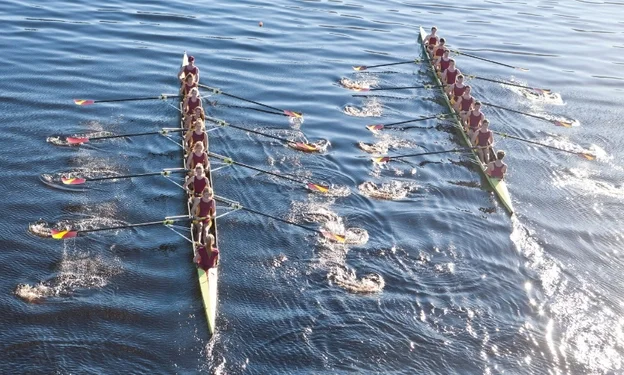
Water sports course setup means planning and installing everything a rowing, canoe, SUP or sailing race needs to run safely and fairly on the water: surveying and marking the course, the start and finish line, boats and equipment, safety boats and lifeguards, referees and race management, results and the shore-side area. The scope is set event by event; specialist lines such as officiating, on-water safety and boats are delivered with specialist teams and partners under a single contract. Permits and official approvals rest with the institution and the relevant authorities; we track the process and help prepare the documents.
Last updated:
How is a water sports race course set up?
Short answer: To set up a water sports race course, you first settle the sport and race format, then survey the water (depth, current, wind pattern, shore access), draw up a course plan and start the permit process with the relevant authorities. The buoys and start and finish line go in the day before or on the morning of the race; safety boats and lifeguards take their positions, and the race officials run the race under the sport’s rules. Decision criteria for weather and wind are written down in advance.
This page is for public or large-scale water sports races run by a municipality, public institution, university or brand. Sailing programmes for company employees are a separate format; for those, see our sailing programmes for company employees.
Which course for which sport?
| Course type | Survey | Marking | Equipment and notes |
|---|---|---|---|
| Rowing straight course (with lanes) | A straight stretch sheltered from wind and current; distance, lane width and depth checked by GPS and depth sounder | Lane buoy lines, start and finish buoys, distance markers at set intervals | Start pontoon or aligner boat, finish judges’ platform; the calmest water is usually found on lakes |
| Canoe sprint course | Straight and laned, as in rowing; short-distance races can use a narrower stretch | Lane buoys, numbered start positions, finish line | Heats and finals; race programme built around the number of categories |
| SUP technical or long-distance course | A closed loop visible from the shore (with turning buoys) or a point-to-point route | Coloured turning buoys, beach or jetty start area, finish chute | Sensitive to waves and wind; a route close to shore makes safety cover easier |
| Sailing race course | Laid on race day according to wind direction; the distance between windward and leeward marks is set by class and wind strength | Windward and leeward marks, a gate and offset mark if needed; start line between the committee boat and the pin buoy | Committee boat, mark-laying boats able to move the course if the wind shifts, signal flags and sound signals |
| Festival demonstration course | A short, closed area visible from the shore, at a safe distance from spectators | Highly visible coloured buoys, marking that separates spectators from the water area | Try-out sessions, relays and demonstrations; can form part of a sports festival programme |
Setup scope: who provides what?
| Scope item | Provided by | Notes |
|---|---|---|
| Course survey and plan | Kurumsal Sporlar | Site visit, depth and current check, a course plan with coordinates; drawings for the permit file |
| Buoys and marking | Kurumsal Sporlar (with partners) | Anchoring the buoys, lane lines, turning and distance marks; removal after the race |
| Start and finish line, judges’ platform | Kurumsal Sporlar | Start pontoon or committee boat, finish platform, timing and signals |
| Boats and equipment | Kurumsal Sporlar (with partners) or participating clubs | Whether competitors bring their own boats or the organiser provides them; the quote is built around this split |
| Safety boats and lifeguards | Kurumsal Sporlar (with specialist teams and partners) | Number and positions of boats planned by course length, number of participants and level; the life-jacket rule is put in writing |
| Referees and race management | Kurumsal Sporlar (with specialist teams and partners) | Race instructions, start procedure, protest process and results under the sport’s official racing rules |
| Results, medals and ceremony | Kurumsal Sporlar | Results by category, medal and trophy production, award ceremony running order |
| Shore side: tents, sound, first aid | Kurumsal Sporlar | Registration and boat park, tents, stage and sound, first-aid point, changing and spectator areas |
| Permits and official approvals | The institution and relevant authorities | Applications are the institution’s responsibility; we track the timetable and help prepare the required documents and drawings |
| Water area and shore allocation | The institution | Use of the shore, jetty, quay or beach; setting aside the spectator area |
Permits: from whom, and when?
Races at sea require the knowledge and approval of the competent authorities, the relevant harbour master’s office in particular, for navigational safety; on lakes, the body responsible for the lake and the local authorities are involved. Shore-side matters such as use of the waterfront, spectator areas, traffic and first aid go through the municipality and the local administration. Which authority asks for which document depends on the location and scale of the event, so we draw up the permit timetable with the institution straight after the first site visit. Applications are the institution’s responsibility; we help prepare files such as the course plan, safety plan and race programme, and track the process.
How is the weather and wind decision made?
In water sports, weather is part of the plan, not a surprise. Each sport has its own sensitivities: sailing needs wind within a certain range, rowing and canoeing need flat water, and SUP is the most sensitive to waves and wind. The decision process is written in advance:
- Setting the criteria: Wind, wave and visibility thresholds for racing, shortening or postponing are set by sport and participant level and written into the race instructions.
- A few days before: Forecasts are monitored and possible scenarios shared with the institution and competitors.
- The day before: The course layout and back-up plan (shortened course, time change, reserve day) are confirmed.
- Race morning: The race officials and the on-water safety lead assess conditions on site; the race management makes the call and announces it through a single channel.
- During the race: If conditions worsen, racing can be stopped; safety boats guide competitors to a pre-agreed assembly point.
Lake or sea?
| Criterion | Lake | Sea |
|---|---|---|
| Water surface | Usually calmer; well suited to rowing and canoeing | Waves and current matter more; the natural home of sailing |
| Wind pattern | Can be shifty and sudden because of the surrounding land | More regular depending on the area; changes with the time of day |
| Fixing the course | Usually shallower, anchoring is simpler | Depth and current call for a more thorough anchoring plan |
| Competent authority | The body responsible for the lake and local authorities | The relevant harbour master’s office and other competent authorities |
| Spectator access | Watching from the shore is often easy | Quay, seafront or beach; planned together with boat traffic |
| Equipment care | Fresh water; simpler maintenance | Salt water; washing and maintenance needed after racing |
Timeline
- T-12 weeks: Sport, format, date range and possible water areas; first site visit.
- T-10 weeks: Course plan, draft safety plan, permit timetable; boat and equipment sources confirmed.
- T-8 weeks: Permit applications made by the institution; registration and category structure announced.
- T-4 weeks: Race instructions, referee and safety teams appointed, medals and print produced.
- T-1 week: Weather scenarios, shore-side layout, briefing for competitors.
- T-1 day / race morning: Buoys and start and finish line installed, technical meeting, final weather decision.
- T+1: Removal, publication of results, short close-out report.
What we need for a quote
- Sport(s) and race format (sprint, long distance, relay, demonstration)
- Preferred water area or city; lake or sea
- Date and a reserve-day option
- Estimated number of competitors and categories; licensed athletes or public participation
- Whether boats come from competitors or the organiser
- Shore-side expectations: spectator area, stage, ceremony, side activities
- Procurement route (tender, direct procurement or sponsored event); for details see our page on sports events for municipalities and public institutions
If you want the race to be part of a festival day, try-it-yourself stations such as a VR canoe experience stand can be added on shore. If participating organisations need preparation before race day, our rowing training programmes can be scheduled as well.
What water sports course setup includes
Site survey and course plan
Surveying the water, checking depth and current, shore access; a course plan with coordinates and drawings for the permit file.
Buoys and marking
Lane lines, turning, windward and leeward marks, distance markers; anchoring, installation and removal.
Start, finish and timing
Start pontoon or committee boat, finish judges’ platform, signals and recording of results.
Boats and equipment
Rowing boats, canoes, SUP boards or sailing boats and equipment where needed; life jackets and competitor equipment checks.
On-water safety
Safety boats and lifeguards; positions along the course, communication plan and emergency assembly point.
Referees and race management
Race instructions, technical meeting, start procedure, protests and results under the sport’s official racing rules.
Ceremony and results
Results by category, medal and trophy production, award ceremony and publication of results.
Shore side
Registration and boat park, tents, stage and sound, first-aid point, spectator area and side-activity stations.
How the quote takes shape
The cost of a course setup depends on the sport, the water area, course length, number of competitors and safety requirements, which is why there are no prices on this page. The quote is settled in three steps.
Sport, venue and date
Sport and format, preferred lake or sea, date and reserve day; estimated number of competitors and categories.
Survey and plan
Assessment of the water area, draft course and safety plan, permit timetable, boat and equipment sources.
Scope and quote
Course, safety, officiating, boats, shore side and ceremony are itemised one by one; the quote arrives within 24 hours in TRY, USD or EUR.
What drives the budget
When comparing quotes for a water sports course, check that each of these lines is itemised. Instead of figures, we show what changes the cost and why; our quote lists the same lines one by one.
| Line | What it covers | Effect on the budget |
|---|---|---|
| Sport and course type | A straight laned course, a loop with turning buoys or a sailing course laid to the wind. | The number of lanes and course length set the number of buoys, the anchoring and installation time. |
| Water area | Lake or sea; depth, current and shore access. | Deep water and current call for a bigger anchoring plan and installation team. |
| Competitors and categories | Heats, finals and categories; the length of the race programme. | The longer the programme, the longer officials, safety and shore teams stay on site. |
| On-water safety | Number and positions of safety boats and lifeguards. | Directly linked to course length, number of competitors and level; we do not recommend saving on this line. |
| Referees and race management | Officials, committee boat, timing and results. | Varies with the sport and number of races. |
| Boats and equipment | Competitors’ own boats or organiser-supplied boats; life jackets. | Organiser-supplied boats become a significant part of the budget. |
| Shore side | Tents, stage and sound, first-aid point, spectator area and boat park. | Varies widely depending on whether the event is a race or a full festival day. |
| Ceremony and production | Medals, trophies, bib or boat numbers, print. | Depends on quantity and level of personalisation. |
Which lines the institution provides and which the organiser provides is settled at quote stage. Quotes can be issued in TRY, USD or EUR.
Programmes that can be planned alongside the course
For race preparation, side activities or a festival day, the rowing, canoe and sailing programmes below can be planned together with the course. Sailing programmes for company employees are a separate format run with instructors.

Applied rowing instruction that moves from the ergometer to the water: stroke technique, synchronisation and b...

Build a standing company rowing crew in Turkey: boat class selection, synchronisation training, cox and stroke...

Sapanca Lake Corporate Canoe and Paddling Experience
Flat water 90 minutes from Istanbul: no waves, two-person canoes, and a format that returns the same day.

A route, not a lesson: dragon boat or canoe along a sheltered bay or lake course, where the aim is to finish t...

Hands-on corporate sailing training for complete beginners: reading the wind, points of sail, tacking and gybi...

A company sailing team made up of your employees: regular instructor-led training sessions, periodic mini sail...

A non-competitive day on the water: sailing, a bay stop, swimming and lunch on deck. Built for mixed-seniority...

An April–May programme that turns the season's first sail into a corporate event: below summer cost, empty mar...

A VR kayaking simulator installed at your venue and played with a real paddling motion. Operator-run setup, da...
Frequently Asked Questions
What does water sports course setup include?
Which sports do you set up courses for?
How is on-water safety provided?
Which rules are refereeing and race management based on?
Which permits are needed, and who obtains them?
What happens if the weather is bad?
How far ahead should we start?
We want a sailing race for our company’s employees. Is this the right page?
Read before you decide
How to Organise a Municipal Sports Festival: Site Plan, Scope and a Proposal Checklist
A sports festival guide for municipalities and public bodies: goals and audience, date and venue, zone plan, stations, s...
Sailing or Rowing? Choosing the Right Water Sport for Your Company Team
Sailing or rowing for your company water sports day? We compare both formats on roles, rhythm, group size, weather and l...
How to Organise a Company Sports Event: An 8-Week Countdown Plan
Counting back eight weeks from event day: what to do each week, which decisions to lock when, and what breaks if a step...
Corporate Sports Event Pricing: A Format-by-Format Budget Guide
What drives the cost of a corporate sports event, which budget band each format sits in, and what to look at when compar...
Get a tailored proposal within 24 hours
Share your headcount and approximate date; we will come back with the format and budget range that fit, within the same business day.
Get a Free Quote