A functional training workshop does not target fitness but the specific problems desk work creates in the body: forward-rolled shoulders, tight hip flexors, weakened glutes and an immobile upper back. Those four appear in almost everybody who sits for eight hours a day.
Why this rather than HIIT
HIIT burns calories and raises fitness but does not correct a postural problem — and in a stiff body, high-tempo movement can cause strain. Functional training is low tempo, focuses on movement quality and does not aim to make anyone sweat. The two are not alternatives but complements; where both are planned, functional training comes first.
The same problem in every office
This is the workshop that translates most directly across countries, because a desk in Istanbul produces the same shoulders as a desk in Frankfurt or Dubai. For a regional wellbeing programme, it is the piece that can be delivered identically at every site, in the same 45 minutes, with the same content and no local adaptation — and it is the one most likely to produce something employees actually repeat, because the closing section is a short set they can do at their own desk.
What is worked on
Hip openers. The area most directly affected by prolonged sitting and a frequent source of lower back pain.
Upper back mobility. The counter-movements to a posture leaning towards a screen.
Shoulder stability. With resistance bands, against the effects of keyboard and mouse use.
Basic movement patterns. Squatting, hinging and pushing, with correct form and no load.
A desk-portable set. A short sequence of three to five minutes that can be done seated or standing.
Setup
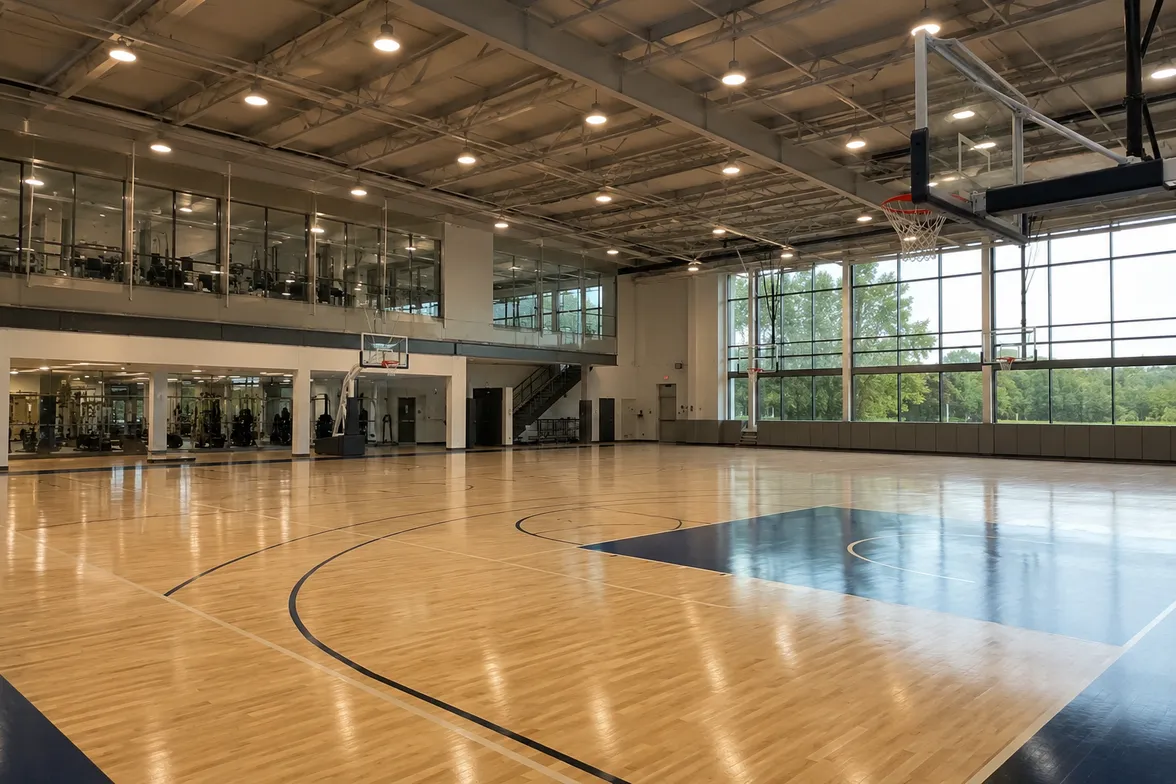
2 m² per participant and a mat are enough; no weights, machines or specialist flooring are needed. Resistance bands are brought in. Participation in business clothing is possible — a practical advantage that markedly increases the participation rate.
Benefits for companies
Set up at the office
Posture focused
Tyres and bodyweight
Low tempo
Movements that transfer to the desk
Frequently asked questions
Can we take part in business clothes?
Largely yes. The pace is low and does not cause perspiration; comfortable clothing is enough. Mats are laid for floor-based movements. This markedly increases participation in lunchtime sessions and in conference settings.
Does it replace physiotherapy?
No. This is a general mobility and strength programme; it does not diagnose or treat. Employees with an existing diagnosis such as a disc problem should seek medical or physiotherapist advice, and the programme is not proposed as a substitute for that.
How often should it be done?
A one-off workshop builds awareness and a movement repertoire. For a lasting effect, a weekly or fortnightly repeat is recommended; alternatively the desk-portable set taught at the close can be done daily.
Can it be planned alongside HIIT?
Yes, and the order matters: mobility and posture first (functional training), then intensity (HIIT). Starting a high-tempo programme in a stiff body increases the risk of strain.
Build Your Company’s 3, 6 or 12-Month Sports Calendar
Interactively select team size, starting month, and focal disciplines (tournaments, wellness, water sports, outdoor retreats). Get an instant date-spread proposal draft sent directly to your inbox.