
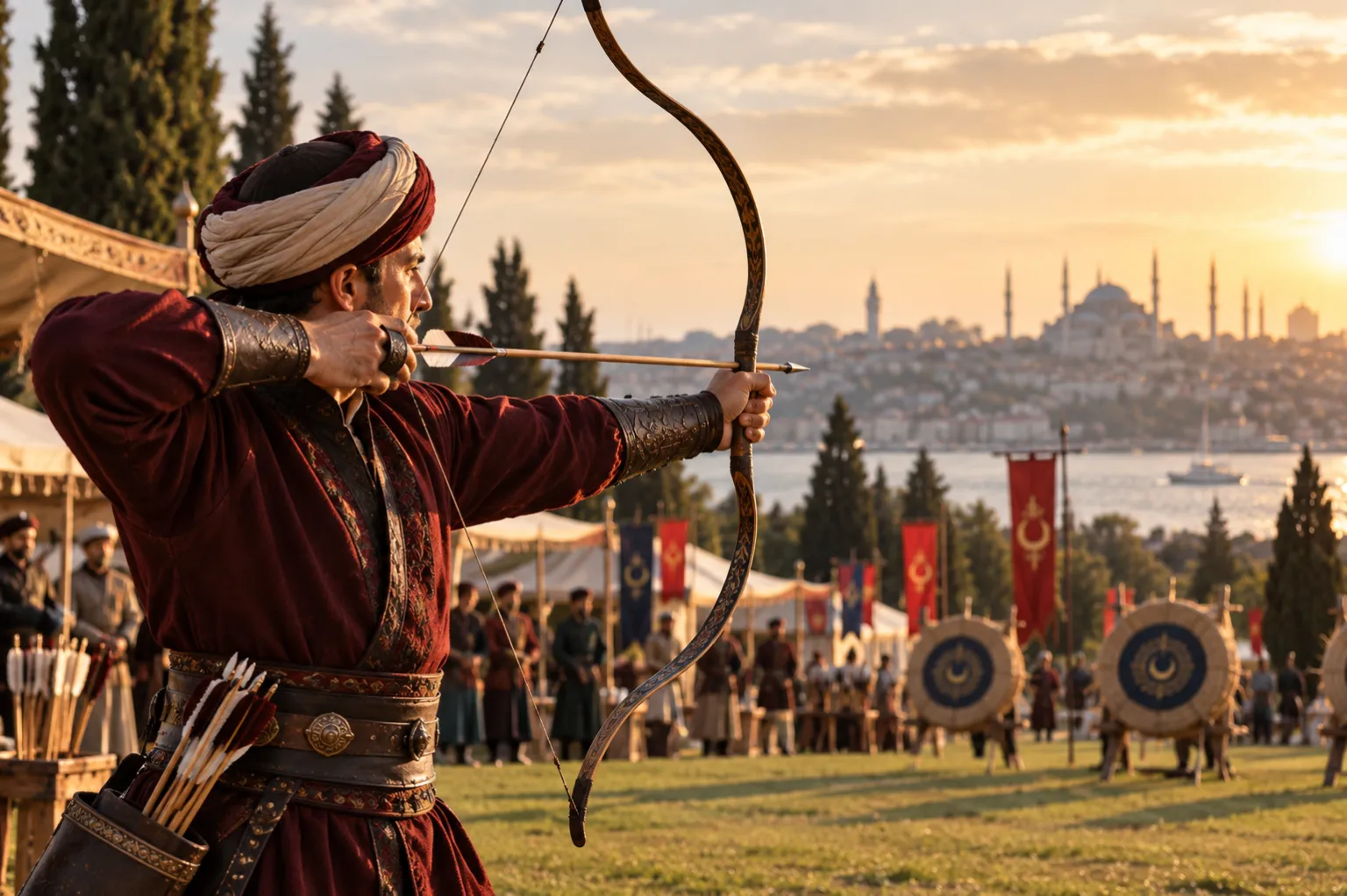
A guide to traditional Turkish archery: the composite Turkish bow, the thumb draw and zihgir ring, flight shooting and the okmeydanı tradition, how it differs from modern archery and how visitors can try it.
Short answer: Traditional Turkish archery is a long-standing archery tradition built around the short, strongly recurved composite Turkish bow of horn, wood and sinew, drawn with the thumb rather than the fingers, with a ring called a zihgir protecting the thumb. Kept alive on the okmeydanı, the archery grounds of the Ottoman era, the tradition placed great weight on target shooting and especially on flight shooting, sending an arrow as far as possible. Today it is practised both as a sport and as living cultural heritage, and it is one of the most memorable things a visiting group can try in Turkey.
This guide explains how the Turkish bow is built, how the thumb draw and the zihgir work, the okmeydanı and flight shooting tradition, how traditional Turkish archery differs from modern archery and how it can be woven into a programme for an international team. If you are completely new to the sport, our guide to what archery is covers the basics first.
Why traditional Turkish archery draws international interest
Many visitors arrive in Turkey knowing about its food, its mosques and its bazaars, but few expect to pick up a bow that belongs to one of the great archery traditions of the world. The Turkish bow is often admired by archers abroad for its elegant, compact shape and for the reputation of the tradition behind it. For a team visiting Istanbul or another Turkish city, trying it is something different from a standard sightseeing tour: a story they hear, a skill they try with their own hands and a small competition they remember long after the trip. Unlike many cultural activities, it is not something you watch; you take part.
The composite Turkish bow
The Turkish bow is a composite bow, meaning it combines several materials. At its heart is a wooden core. On the belly, the side facing the archer, layers of horn are glued on; on the back, the side facing away, layers of animal sinew. Horn resists compression well and sinew resists stretching well, so together they let a short bow store a remarkable amount of energy.
Its most striking feature is its shape. Unstrung, a traditional Turkish bow curls strongly forward into a deep "C" or crescent. When it is strung, the limbs are bent back the other way and the bow takes on its distinctive wave-like silhouette. The short length suited shooting from horseback, while the deep recurve gave the arrow a high launch speed. Making a composite bow in the traditional way involves long periods of drying and seasoning between stages, which is why it has always been regarded as a craft demanding real mastery.
Today, "traditional-style" bows that keep the same shape and character but are made with modern materials are widely used. They are more forgiving of temperature and humidity, need less care and are the bows normally used in taster sessions and training. For a visiting group, the experience of the shape, the draw and the release is the same.
The thumb draw and the zihgir ring
In modern archery the string is usually drawn with three fingers: index, middle and ring. In traditional Turkish archery it is drawn with the thumb. The thumb hooks around the string and the index finger locks down over the thumb to hold it in place. This technique was used across a vast area stretching from Central Asia and Anatolia to Korea and Hungary, and it is why the Turkish tradition is often grouped with other "thumb ring archery" traditions.
With a thumb draw the whole pressure of the string sits on a single point. The ring worn to protect the thumb from that pressure is called a zihgir. Zihgirs were made from bone, horn, leather, metal or stone, and ornate examples were also worn as a mark of status, which is why they appear in museum collections today. The shape of the zihgir directly affects the release, so traditional archers choose or have one made to fit their own thumb.
Another feature of the thumb draw is where the arrow sits. For a right-handed archer it rests on the right side of the bow, over the bow hand, rather than on an arrow rest on the left as with most modern bows. That may sound like a small detail, but it changes the whole feel of aiming and releasing, and it is one of the first things visitors notice when they switch from a modern bow.
The okmeydanı and the flight shooting tradition
In the Ottoman era archery was regarded both as a military skill and as a highly respected sport. Several cities had archery grounds, known as okmeydanı ("arrow field"), where archers trained and competed, the best known being in Istanbul. These grounds had their own rules, ceremonies and master–apprentice relationships: an archer trained under a master and passed through recognised stages before being accepted as a master in turn.
One of the most celebrated branches of the Turkish tradition is flight shooting (menzil atıcılığı), in which the aim is not to hit a target but to send the arrow as far as possible. Special light, short flight arrows were used for this. It is known that stones were erected on the archery grounds where exceptional shots landed, commemorating the archer and the achievement, and some of these markers survive. Alongside flight shooting, the tradition also included shooting at targets, shooting from horseback and shooting to pierce tough materials.
As firearms spread, archery gradually faded from everyday life. In recent decades, however, traditional Turkish archery has been revived by clubs, foundations and enthusiasts, and it now attracts interest both as a sport and as living heritage, in Turkey and among archers abroad.
Traditional Turkish bow vs modern bow
| Feature | Traditional Turkish bow | Modern recurve / compound bow |
|---|---|---|
| Materials | Horn, wood and sinew (or modern materials in the same form) | Aluminium, carbon, fibreglass |
| Length | Short, with a deep recurve | Longer (recurve) or compact with cams (compound) |
| Draw | With the thumb, wearing a zihgir | Three fingers or a mechanical release aid |
| Arrow position | Right of the bow for a right-handed archer, over the hand | Usually left of the bow, on an arrow rest |
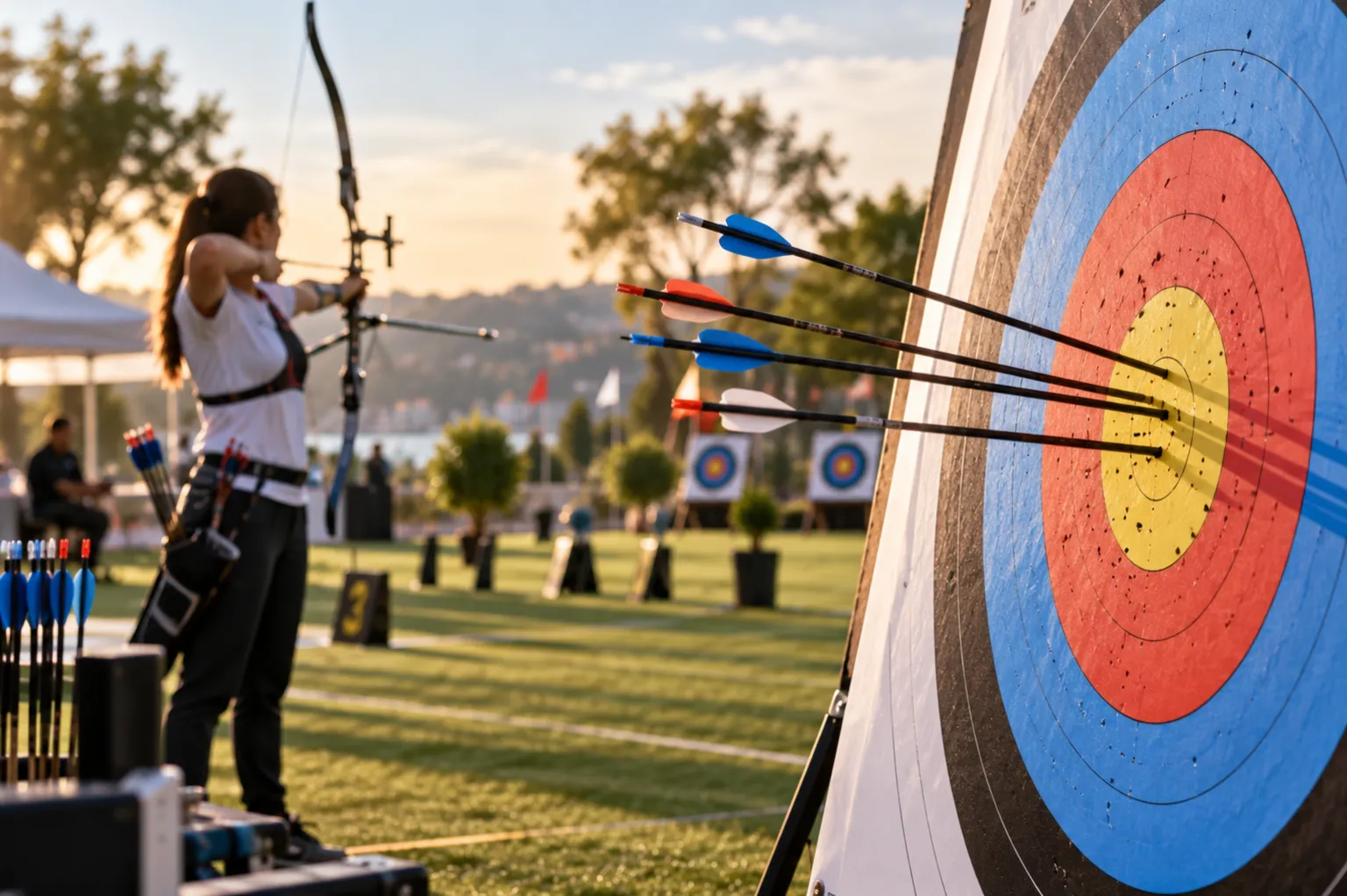
| Aiming | No sight; instinctive | Sight, sometimes with a magnifier |
| Learning curve | Longer; relies on feel and repetition | Quicker accuracy |
| What the experience is about | Technique, history and culture together | Score and accuracy |
Because of these differences, starting a group of complete beginners straight on a traditional bow can be frustrating. With corporate groups the order that works best is to let people feel what accuracy is like on a modern bow first, then introduce the traditional bow and the zihgir. Nobody spends twenty minutes failing with an unfamiliar bow, and the contrast makes the traditional technique all the more interesting.
How visitors can try traditional Turkish archery
- Start with the story: a short introduction to the bow, the zihgir and the okmeydanı tradition makes every shot that follows more meaningful.
- Warm up on a modern bow: stance, breathing and release are learned on a modern bow first.
- Get to know the zihgir: the instructor shows how to wear the ring and form the thumb lock, and participants try the draw without an arrow under supervision before shooting.
- Begin close: the first traditional shots are taken at a short distance, and the target moves back as accuracy improves.
- Finish with a mini competition: a short team contest at a ringed target brings the session to a lively close.
- Safety never changes: a one-direction shooting line, arrows collected only on the instructor's command, arm guards and no alcohol.
No previous experience is needed and nobody needs to change into sportswear. Anyone with a shoulder, hand or back complaint should let the instructor know beforehand; for health conditions, checking with a doctor before taking part is advisable.
Practical planning notes for international groups
If you are organising a trip to Turkey for a team based abroad, these points make an archery session run smoothly:
- Language: the cultural narration and safety briefing can be delivered in English, so nobody misses the story or the rules.
- Space: 10 to 18 metres between the shooting line and the targets, with safe clear space behind, is enough. A hotel garden, an open area or an indoor hall can work, so the session can sit close to where your group is already staying or meeting.
- Timing: a taster with storytelling fits comfortably into half a day or between conference sessions; it pairs well with a city walk or a dinner.
- Group flow: a typical set-up has four to eight targets, and participants shoot in rotating groups, so the line keeps moving even with a larger group.
- Weather: outdoors, strong wind shortens the distance; having an indoor option in mind is sensible for the cooler months.
- Mixed groups: because it does not depend on strength or fitness, it works for a wide age range and for senior leaders and new joiners alike.
Combining archery with the rest of your programme
Traditional Turkish archery fits naturally into incentive trips, offsites and the free afternoon of a conference. In Istanbul it pairs well with a walk through the Sultanahmet and historic peninsula, giving the group both the monuments and a hands-on piece of the culture behind them, or with a wider Istanbul incentive programme. If you are planning several activities, our page on corporate sports events in Turkey for international teams brings together sailing, rowing, treasure hunts and other options suited to visiting groups, and our Turkey DMC services cover the wider logistics.
If you would like a programme for your team that combines traditional and modern bows with cultural storytelling, take a look at our archery experience and send us your group size, dates, city and preferred language through the quote request form. We bring the instructors, bows, zihgirs and safety layout, and shape the session around the rest of your programme.

Leave a Comment