
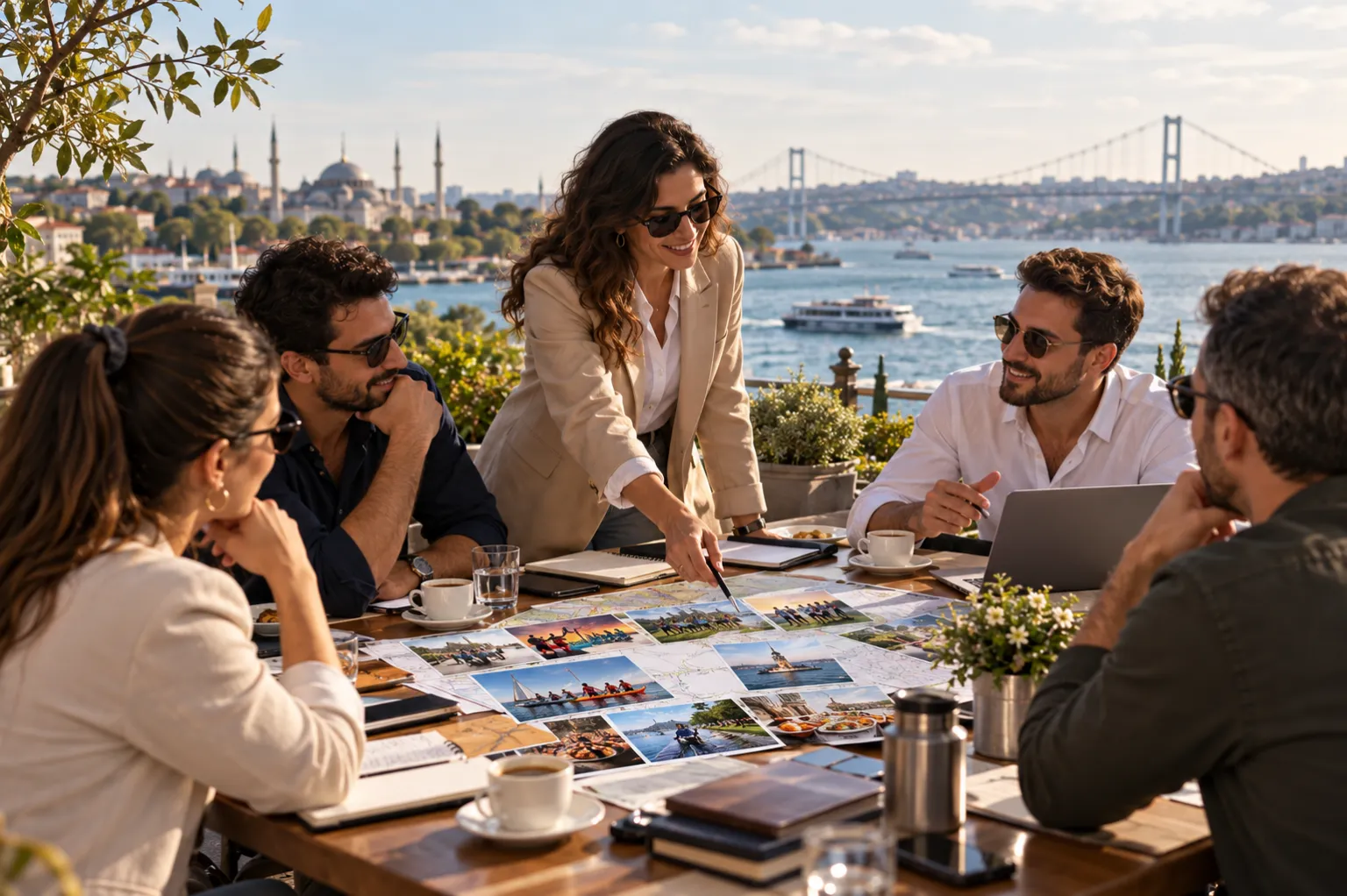
Which team activity works in Istanbul in which month? A season-by-season guide for planners bringing teams from abroad: daylight, wind, crowds, which side of the city to base yourself on, and a month-by-activity table.
Short answer: The best team building activities in Istanbul depend first on the season and second on which side of the city your group is staying. April to June and September to October are the easiest months for anything outdoors — treasure hunts, sailing, rowing and long walks by the Bosphorus. In July and August the programme moves to the water, the shade and the hours either side of midday. From November to March short days and rain mean an indoor-led programme with outdoor slots placed around lunchtime and a back-up for every one of them.
This guide is written for planners bringing a team to Istanbul from abroad and for HR teams at international companies based in Turkey (Türkiye). It is not another list of ideas — for that, see our 30 team building games and activities, and for multi-day formats, our Istanbul corporate retreat guide. Here we answer one practical question: which activity, in which month, under which conditions? If you are searching for things to do in Istanbul with a group and your dates are already fixed, this is the page to start from.
Four things to know before you pick a season
- Turkey does not change its clocks. The country stays on the same time all year. In practice that means a December sunrise at around 08:15 and sunset at around 16:40, while in June it is still light after 20:30. Teams arriving from Western Europe are often surprised by how early winter evenings close in, so any outdoor activity in winter has to finish by mid-afternoon.
- The side of the city matters more than the activity. Istanbul is split by the Bosphorus into a European side and an Asian (Anatolian) side. If your hotel is on one side and your activity is on the other, bridge traffic can swallow an hour each way. Either choose an activity on your hotel’s side or cross by public ferry, which turns the journey into part of the day.
- Two winds shape the water. The poyraz, a north-easterly, is the common summer wind: it cools the city and gives good sailing. The lodos, a south-westerly, raises a chop on the Sea of Marmara and, on rare stormy days, disrupts ferry services. Any activity on the water needs a decision time and a reserve date written into the plan.
- Ramadan and the two religious holidays move. They fall roughly eleven days earlier each year. During Ramadan, restaurants fill at sunset for the fast-breaking meal; during the holidays, traffic and availability change. Check the dates in our guide to the best time for corporate events in Turkey, which covers the rest of the country region by region.
Spring (March to May): a slow start and a superb finish
March still behaves like winter: cool, windy and often wet, with the occasional bright, deceptive day. April is when the city opens up. Parks are planted with tulips, daylight runs past seven in the evening and walking routes become a pleasure rather than an endurance test. May is one of the most balanced months of the year for outdoor activity in Istanbul — warm but not hot, long days, and the summer crowds have not yet arrived.
What works in spring
- Treasure hunts and city orienteering. From April every route is open. The Old Town, the Golden Horn neighbourhoods and Kadıköy–Moda on the Asian side are all comfortable on foot. Our Istanbul treasure hunt page sets out six routes and how to choose between them.
- Sailing. The season opens in April, but the sea is still cold, so plan a long lunch on deck rather than a swim stop. By May, sailing at the southern entrance of the Bosphorus and on the Marmara side is at its most comfortable.
- Rowing. Beginner crews need flat water, so the Golden Horn and sheltered coves on the Bosphorus are the usual choices. Spring mornings are cool on the water; layers matter more than people expect.
- Forest walks. The Belgrade Forest on the northern edge of the city is green and quiet in May, and well suited to a trekking or orienteering half day.
What to watch
In March and early April, every outdoor slot needs an indoor fallback that can be switched on the evening before. Spring also brings the first conference peak, so hotel availability in central districts tightens from late April.
Summer (June to August): lean on the water, the morning and the evening
June is outstanding: the longest days of the year, a sea that is warming up and evenings that seem to go on forever. July and August are a different proposition. Middle-of-the-day heat and humidity make long walks on steep streets hard work, and the Princes’ Islands, the Bosphorus shore and the popular neighbourhoods fill up, especially at weekends.
What works in summer
- Sailing and boat days. This is the season for them. The poyraz usually provides steady sailing, the water is warm enough to swim from around mid-June and a sunset sail followed by dinner is a natural closing night. See our Istanbul sailing experience for formats, from a half-day sail to a friendly mini sailing skills race.
- An island day. The car-free Princes’ Islands are at their most appealing, but go on a weekday and leave early.
- Treasure hunts, rescheduled. Start at 09:00 and finish before lunch, or start after 17:00 and finish with dinner. Waterside and shaded routes, such as the Bosphorus shore, are better than hill climbs.
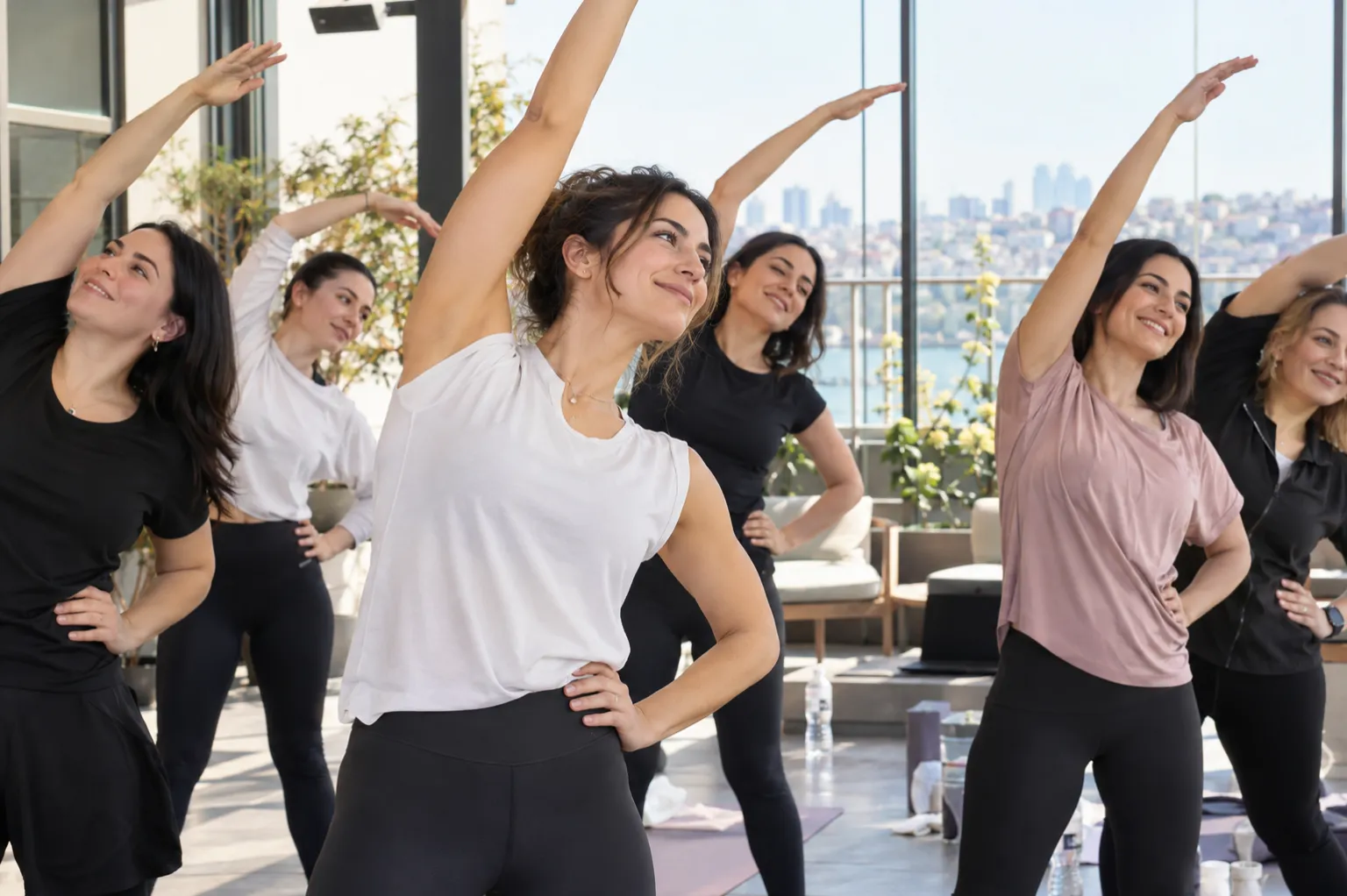
- Sunrise sessions. A short yoga or stretching session in a waterside park at the start of the day is a gentle way to begin a conference morning before the heat builds.
What to watch
Water, hats, sun cream and a shaded meeting point should be written into the briefing, not left to chance. The steep Balat–Fener stretch of the Golden Horn route is shortened in July and August. If your group includes people who are not used to heat, keep activity blocks to two hours and build in indoor breaks.
Autumn (September to November): the safest window for planners
September is arguably the best month of the year for a team on the water. The sea is still warm, the light is softer and the holiday crowds have gone home. October is cool, clear and ideal for walking, though the sailing season closes towards the end of the month. November turns unsettled: rain becomes more frequent and darkness falls before five.
What works in autumn
- September: sailing with a swim stop, island days, sunset programmes along the Bosphorus.
- October: every city route, rowing, forest walks and orienteering; short sailing programmes until the season ends.
- November: outdoor activity concentrated around midday, with the evening programme indoors — padel, bowling, an escape room or a small internal tournament.
What to watch
Autumn is also peak conference season, so hotels and venues book out early. On one Sunday in November the city’s big marathon closes the Bosphorus bridges and several main roads for much of the day; check the date before you schedule transfers.
Winter (December to February): short days, indoor strength, a smart back-up
An Istanbul winter is usually mild by northern European standards but wet and windy, with a few days of snow most years. Outdoor activity is still possible; it simply has to fit into roughly eight or nine hours of daylight. We have gathered the indoor formats we use on our winter corporate events page.
What works in winter
- Indoor sport: padel, bowling, escape rooms, climbing walls, hall tournaments and team races on rowing machines.
- Short outdoor routes: treasure hunt routes with covered sections, such as the arcades of Galata or the streets around the Grand Bazaar, run between 11:00 and 15:00.
- The water, the easy way: sailing is off the calendar, but a public ferry crossing between Europe and Asia remains the simplest way to show a visiting team the city, even in the rain.
Month-by-activity table
| Month | Weather and daylight | Best-fit activities | Watch out for |
|---|---|---|---|
| March | Cool, wet, changeable | Indoor sport plus a short city route | A fallback for every outdoor slot |
| April | Mild, tulip season, light evenings | Treasure hunts, orienteering, rowing | Cold sea; no swim stop on sails |
| May | Balanced, long days | Treasure hunts, sailing, rowing, island day | Check religious holiday dates |
| June | Warm, longest days | Sailing with a swim, island day, sunset sail | Weekend crowds begin |
| July–August | Hot and humid, poyraz | Morning or late-afternoon sails, early island day | No walking routes at midday |
| September | Warm sea, fewer crowds | Sailing, islands, Bosphorus shore | Conference season; book hotels early |
| October | Cool and clear | All city routes, rowing, forest walks | Sailing season closes late in the month |
| November | More rain, early dark | Midday route plus indoor evening | No outdoor plans after 16:30 |
| December–February | Cold, wet, short days | Padel, bowling, escape rooms, hall tournaments | Lodos days can disrupt ferries |
Choosing your side of the city and managing crowds
Groups staying on the European side have the Old Town, the Golden Horn and Galata within a short transfer, and Istanbul Airport is on the same side. Groups landing at Sabiha Gökçen, or companies with offices on the Asian side, are usually better served by Kadıköy–Moda routes and marinas on the Anatolian shore. Whatever the side, the rule for crowds is the same: weekdays beat weekends, and early morning or late afternoon beats midday. On days when cruise ships are in port, Karaköy and the Old Town are noticeably busier, so ask about the schedule before you lock in a date.
A practical checklist for international teams
- Briefings, clue cards and safety notes in English, or bilingual for mixed groups.
- Airport, hotel and activity transfers timed around rush hour, not just distance.
- A dress note sent before arrival: comfortable shoes for hills, covered shoulders and knees near places of worship, non-slip soles for boats.
- A decision time and reserve date in writing for anything on the water.
- Dietary needs collected early, particularly for long lunches on board or on the islands.
Conclusion: Team Building Activities in Istanbul for International Teams
Istanbul rewards planners who let the calendar choose the activity rather than the other way round: water and islands in summer, city routes in spring and autumn, indoor sport with a short outdoor window in winter. If you are bringing a team from abroad, our page on corporate sports events in Turkey for international teams explains how we handle transfers, accommodation and English-language delivery around the activity itself. Send us your dates, group size and hotel area through the quote request form and we will propose a season-appropriate programme with a back-up built in.

Leave a Comment