
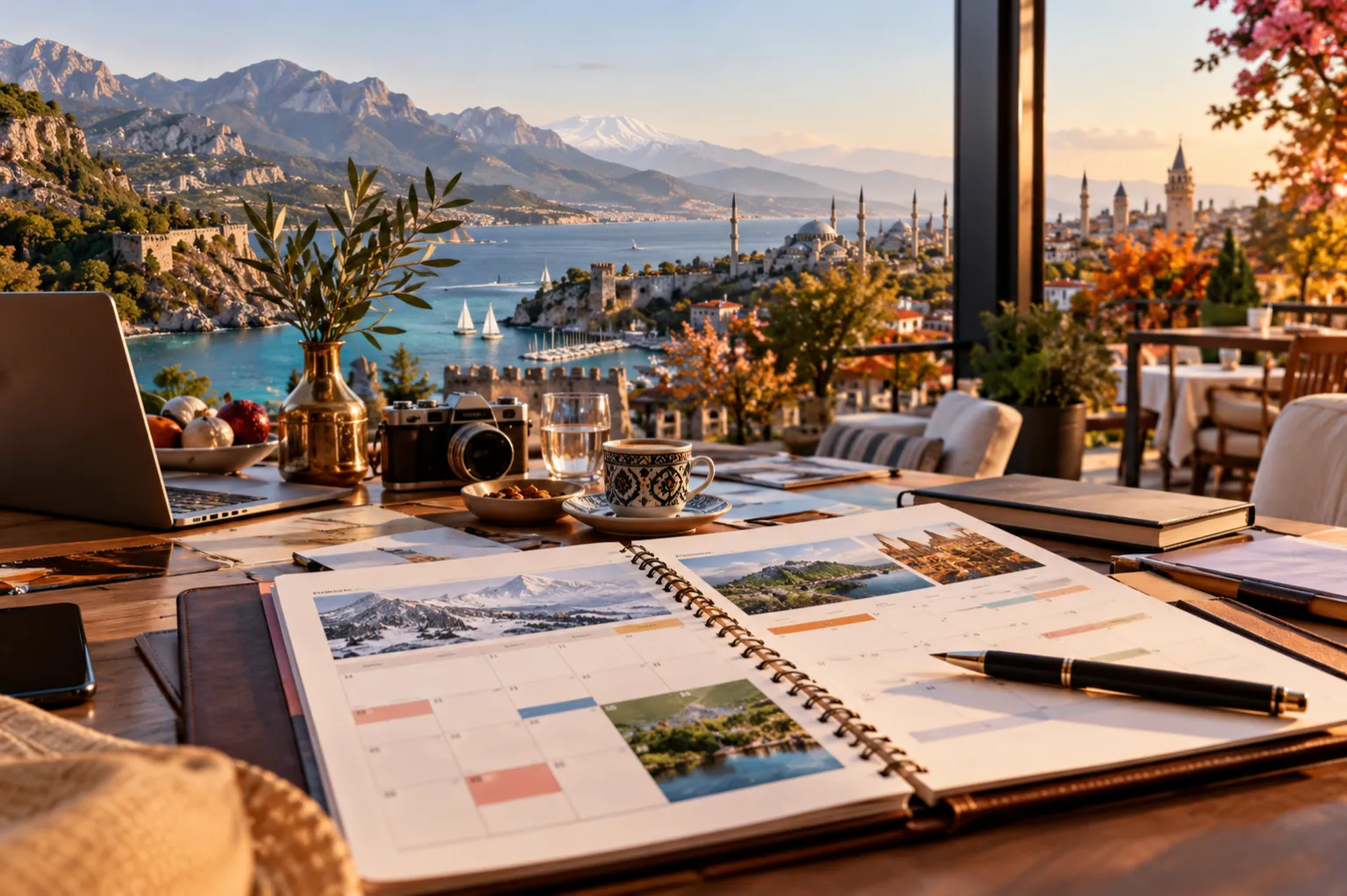
When is the best time for a corporate event in Turkey? A month-by-month table for Istanbul, the Aegean, Antalya, Cappadocia, Uludağ and Ankara, activities by season and 2027 public holidays.
Short answer: The most flexible periods for corporate events in Turkey are spring (April to early June) and autumn (September to early November). In these months the weather in Istanbul, the Aegean coast, Antalya and Cappadocia suits outdoor programmes, and the summer crowds have either not arrived yet or have already left. Summer works best for coastal and water-based activities, while winter is the season for skiing at Uludağ and mild-weather offsites in Antalya. The right date depends on region, activity and Turkey's public and religious holidays, all considered together.
This guide is written for event and HR managers bringing teams to Turkey from abroad, as well as for teams already based here. Instead of exact temperatures, it brings together general climate patterns, crowd seasons and the 2027 holiday calendar in a form you can plan with. If you are organising a trip for an international team, our page on corporate sports events in Turkey for international teams covers the practical and commercial side.
Four questions before you pick a date
- Is the programme outdoors or indoors? For conferences, meetings and ballroom events, climate is secondary. For sport, nature and sea activities, it is decisive.
- Which region? Turkey's climate varies sharply from one region to another. In the same week you can have rain in Istanbul, sunshine in Antalya and a chilly evening in Cappadocia.
- Does it suit participants' calendars? Public holidays, religious holidays, school breaks and your own quarter-end close all affect attendance.
- How does the season affect budget and availability? In high season hotels, flights, transfers and venues fill up and quotes rise. Off season you get more choice, but some properties may be closed.
The best time to visit, region by region
Istanbul
Istanbul is a year-round conference and meeting city. For outdoor elements, the most comfortable windows are April to June and September to early November. July and August are hot and humid, with heavy tourist traffic. Winters are cool and wet; Bosphorus boat programmes are still possible, but you need an indoor back-up. If you are wondering about the best time to visit Istanbul for a conference, bear in mind that spring and autumn are also peak conference season, so the best hotels sell out early. For Bosphorus-based programmes, see our page on corporate sports events on the Istanbul Bosphorus.
The Aegean: Bodrum and Çeşme
On the Aegean coast, May to June and September to October offer the best balance: the sea is pleasant for swimming and the resorts are calmer. July and August are peak season, with heat, full hotels and busy roads. Çeşme's reliable summer winds make it a good base for sailing and windsurfing. From November to April a number of beach resorts close for the off season, so city hotels and year-round properties are the safer choice.
Antalya
Antalya has the longest season in Turkey. March to May and October to November are ideal for outdoor sport, golf and nature programmes. Summer is very hot, so activities need to shift to early morning and late afternoon. Winters are mild, which makes December to February workable for offsites and meetings; the large resorts in and around Belek host conferences and sports camps at this time. See our Antalya corporate retreat guide for more detail.
Cappadocia
The best time to bring a group to Cappadocia is April to June or September to October: days are comfortable for hiking and cycling, and evenings are cool. Summer days can be hot while nights are noticeably cooler. Winters are cold and snow is possible; the landscape is spectacular, but outdoor time is shorter. Hot-air balloon flights run in every season but depend entirely on weather and wind, and can be cancelled by the authorities, so building a spare morning into the schedule is wise. For tailored programmes, see corporate event organisation in Cappadocia.
Uludağ and Bursa
Uludağ's ski season usually runs from December to March, depending on snowfall, and this is when winter offsites with ski lessons take place. In summer, the mountain's cooler air suits hiking and nature programmes. Bursa city centre works year-round for meetings and indoor events.
Ankara
Ankara has a continental climate, with cold winters and hot, dry summers. As a business and government city, its conference calendar stays busy all year. For outdoor sports events, April to June and September to October are the best months; in winter, indoor sports halls and hotel meeting spaces take over.
Turkey by month: a suitability table for events
The table below gives general guidance for programmes with a strong outdoor element. Ideal: comfortable outdoor conditions. Good: works well with planning. Caution: heat, cold, rain or crowds call for extra measures. Indoor: build the programme mainly around indoor venues.
| Month | Istanbul | Aegean (Bodrum/Çeşme) | Antalya | Cappadocia | Uludağ/Bursa | Ankara |
|---|---|---|---|---|---|---|
| January | Indoor | Indoor | Good | Caution (snow) | Ideal (skiing) | Indoor |
| February | Indoor | Indoor | Good | Caution (snow) | Ideal (skiing) | Indoor |
| March | Caution (rain) | Caution | Ideal | Caution | Good (end of season) | Caution |
| April | Ideal | Good | Ideal | Ideal | Caution (transition) | Good |
| May | Ideal | Ideal | Ideal | Ideal | Good | Ideal |
| June | Ideal | Ideal | Good | Ideal | Ideal (highlands) | Ideal |
| July | Caution (heat, crowds) | Caution (peak season) | Caution (very hot) | Good | Ideal (highlands) | Caution (heat) |
| August | Caution (heat, crowds) | Caution (peak season) | Caution (very hot) | Good | Ideal (highlands) | Caution (heat) |
| September | Ideal | Ideal | Good | Ideal | Good | Ideal |
| October | Ideal | Ideal | Ideal | Ideal | Good | Good |
| November | Good | Caution (end of season) | Ideal | Good | Caution (transition) | Caution |
| December | Indoor | Indoor | Good | Caution (cold) | Ideal (if snow) | Indoor |
Weather varies from year to year, so treat the table as a pattern rather than a guarantee and always prepare a back-up plan for outdoor elements (see our 2027 corporate event calendar).
Which activities suit which season?
| Season | Standout activities | Best regions |
|---|---|---|
| Spring (April–June) | Treasure hunts, orienteering, cycling, hiking, company olympics, boat programmes | Istanbul, Cappadocia, Aegean, Antalya, Ankara |
| Summer (July–August) | Sailing, beach volleyball, rowing, water sports, late-afternoon programmes, highland walks | Aegean, Antalya (mornings/evenings), Uludağ, Cappadocia |
| Autumn (September–November) | Team-building games, golf, outdoor sports days, Bosphorus programmes, culture and nature tours | Istanbul, Antalya, Cappadocia, Aegean |
| Winter (December–March) | Skiing and snow activities, indoor tournaments, bowling, padel, offsite meetings | Uludağ, Antalya, Istanbul and Ankara (indoors) |
Turkey's public holidays in 2027
Turkey's holiday calendar is the item international organisers most often overlook. During religious holidays domestic travel surges, demand for hotels and transport rises and some suppliers work reduced hours. The dates of the two religious holidays move about eleven days earlier each year.
| Date (2027) | Day | Holiday | Impact on planning |
|---|---|---|---|
| 1 January | Friday | New Year's Day | Long weekend; little event activity in the first week |
| 8 March (eve, half day) – 9–11 March | Monday–Thursday | Ramadan Feast (Ramazan Bayramı) | Falls mid-week; watch for bridge days and any extra administrative leave announced by the government |
| 23 April | Friday | National Sovereignty and Children's Day | Long weekend; demand for short breaks rises |
| 1 May | Saturday | Labour and Solidarity Day | Some squares and roads in large cities may be restricted |
| 15 May (eve, half day) – 16–19 May | Saturday–Wednesday | Feast of the Sacrifice (Kurban Bayramı) | Overlaps with 19 May; avoid mid-May for events |
| 19 May | Wednesday | Commemoration of Atatürk, Youth and Sports Day | Falls on the last day of Kurban Bayramı in 2027 |
| 15 July | Thursday | Democracy and National Unity Day | Single-day holiday; can affect Thursday–Friday plans |
| 30 August | Monday | Victory Day | Long weekend; the last busy stretch of summer |
| 28 October (half day) – 29 October | Thursday–Friday | Republic Day | Long weekend; strong demand for celebrations and events |
During Ramadan (roughly the four weeks before the feast in 2027), some participants may be fasting. Rethinking lunch and strenuous daytime activities, and planning an evening programme around the iftar meal at sunset, makes the event more inclusive. School holidays (the mid-year break from late January to early February, and the summer break from mid-June to September) shape when employees with families take leave.
Crowds, seasons and what they do to your quote
Season affects not only the weather but also availability and pricing. The general patterns are:
- Peak season (July–August, coastal regions): availability of hotels, transfers, boats and guides tightens, line items rise, and crowds lengthen transfer times.
- Shoulder season (April–June, September–October): the most balanced period, but it coincides with Istanbul's conference calendar, so the best hotels fill early. We recommend booking four to six months ahead.
- Off season (November–March, coast): more choice and flexibility, but some beach resorts are closed and outdoor options are limited. Antalya is the exception.
- Religious holidays and long weekends: domestic demand peaks and you compete with holidaymakers for the same rooms and seats.
The cost drivers stay the same in every season: number of participants, number of days, location, accommodation, flights and transfers, activity equipment, the number of guides and instructors, and catering. The season changes the availability and cost of each of these.
Extra notes for international teams
- Visas and entry requirements: these depend on participants' nationalities; check official sources early.
- Flight connections: Istanbul and Antalya have the strongest direct international links; Cappadocia and Bodrum usually need a connecting flight or a road transfer.
- Multi-destination programmes: combinations such as a meeting in Istanbul followed by two days in Cappadocia work best in shoulder season. For this kind of trip, see our DMC services in Turkey and incentive travel organisation pages.
- Comparing destinations: our destination guide covers the highlights of 16 cities.
How far ahead should you plan?
- Half-day or full-day event within one city: 4–8 weeks is usually enough; start earlier in shoulder season and in December.
- Residential domestic offsite: fix the dates and region 3–4 months ahead.
- International group or multi-destination programme: 4–6 months, and more for Istanbul during conference season.
- Dates close to religious holidays or long weekends: these need the earliest bookings for transport and accommodation.
Conclusion
There is no single best month for a corporate event in Turkey; the right timing depends on region, activity and your participants' calendars. As a rule, spring and autumn offer the widest choice, summer belongs to the coast and the water, and winter suits Uludağ and Antalya. Putting religious holidays and the conference season into your plan from the start prevents most surprises. If you would like a recommendation on dates and regions for your team, fill in our quote request form and we will look at the options for your region, season and group together.


Leave a Comment