
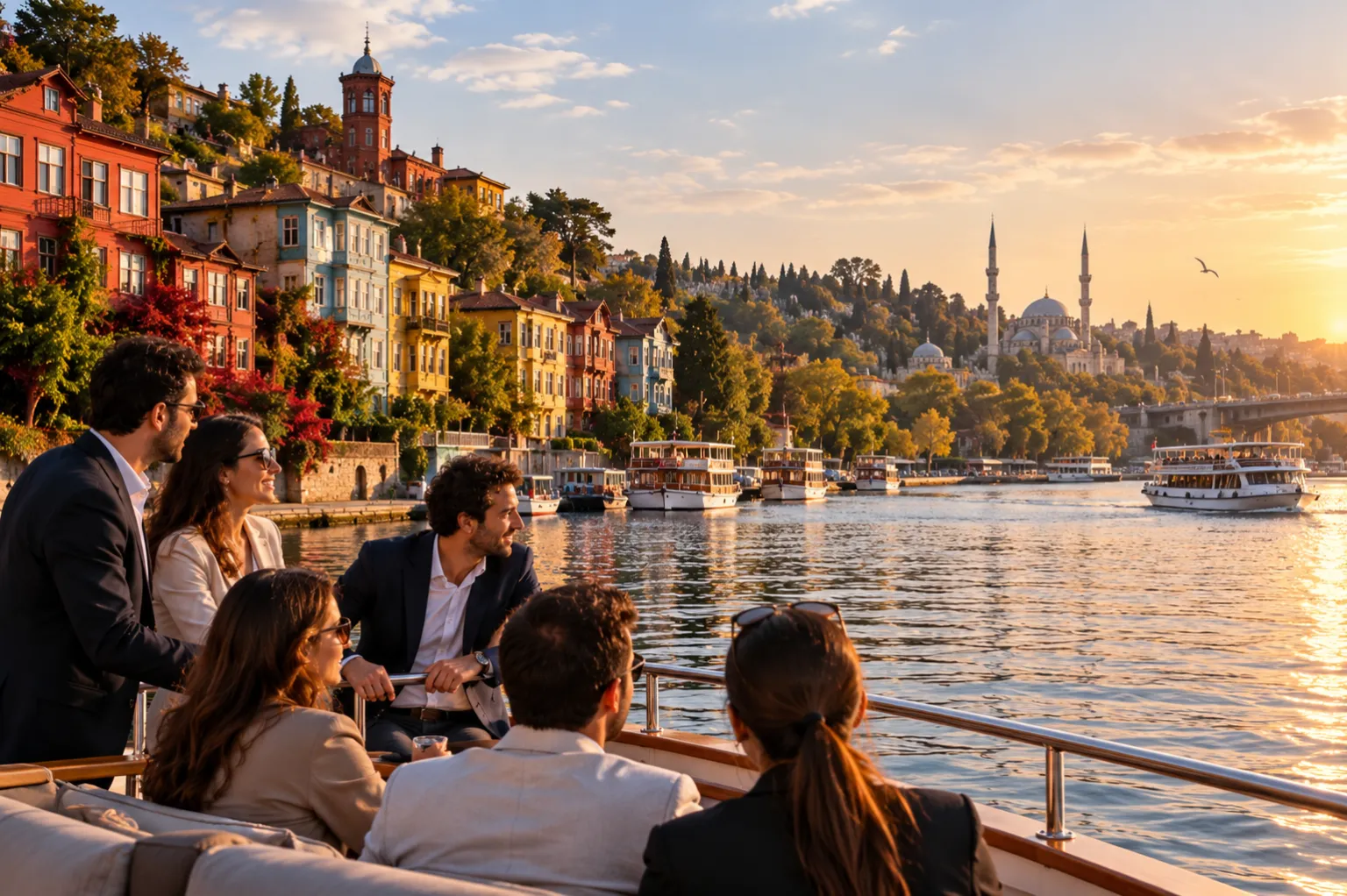
Taking a group to the Golden Horn: the character of Balat, Fener, Ayvansaray and Eyüp, the cable car to Pierre Loti, neighbourhood etiquette, rowing on the inlet, sailing from it, and half-day and full-day plans.
Short answer: The Golden Horn in Istanbul gives a corporate group one of the most layered half days in the city: the colourful houses of Balat, the steep historic streets of Fener, a cable car from Eyüp up to Pierre Loti hill and some of the calmest water in Istanbul. The best plan usually puts the group on the water in the morning (rowing) and in the neighbourhoods in the afternoon (a walk or a treasure hunt). Sailing yachts cannot sail inside the Golden Horn because of its bridges, so a Golden Horn sailing day meets on the Golden Horn–Karaköy waterfront and sails at the mouth of the inlet and on the Bosphorus. These are lived-in neighbourhoods, so groups should move in small numbers, quietly, and follow clear photography rules.
This guide is for planners bringing teams to Istanbul from abroad and for HR teams at companies based in the city. If your group is set on the monuments of the Old Town, we cover that on our Sultanahmet and Historic Peninsula corporate events page. Here the subject is the Golden Horn itself: what is there, how to move a group through it respectfully, and how to combine land and water in one day.
What is the Golden Horn, and why does it suit groups?
The Golden Horn is a long, narrow inlet that branches off from the point where the Bosphorus meets the Sea of Marmara and runs several kilometres into the European side of Istanbul. The Galata Bridge crosses its mouth, and further bridges cross it inland. The southern shore runs from Eminönü through Fener, Balat and Ayvansaray to Eyüp; the northern shore mixes old shipyards with renewed waterfront parks and a congress centre.
For a corporate group, the appeal is contrast. The Golden Horn feels more local than the monument-heavy Old Town and calmer than Beyoğlu. Clues and conversations are about door knockers, painted façades and the stories behind street names rather than famous interiors everyone has already photographed. Visitors who have done the classic sights on a previous trip often say this is the Istanbul they did not know existed. It is also compact: a group can row, walk, ride a cable car and finish with a view of the whole inlet without ever getting on a coach.
The neighbourhoods, briefly
| Area | Character | Group note |
|---|---|---|
| Fener | Steep lanes, historic churches and a landmark red-brick school building on the hill | Great viewpoints; the climbs are tiring |
| Balat | Colourful houses with bay windows, narrow streets, a cast-iron church by the water | The most visual stretch; very busy at weekends |
| Ayvansaray | Where the old land walls meet the Golden Horn; a quiet shoreline | A short history stop with few crowds |
| Eyüp | An important place of pilgrimage and hillside cemeteries | Most people come to pray; be quiet and respectful |
| Pierre Loti hill | Reached by cable car from Eyüp; looks down the whole inlet | A natural finale or closing point |
Balat and Fener for groups
Balat and Fener sit side by side and are best treated as one stretch. Fener’s slopes are framed by historic churches and the red-brick school building that dominates the skyline, while Balat’s painted houses, many with traditional bay windows, climb from the waterfront. The neighbourhoods have been home to Greek, Jewish, Armenian and Muslim communities over the centuries, and that layered history is what gives the walk its depth. Distances are short but the streets are steep; with a mixed-fitness group, keep the uphill sections brief and use the flat waterside path to link them.
Eyüp, the cable car and Pierre Loti
Eyüp is home to one of the most important places of pilgrimage in Istanbul. Many people there have come to pray, not to sightsee, so tasks and gatherings stay outside the mosque courtyard and away from prayer times — Friday midday in particular. The cable car from Eyüp to Pierre Loti hill is short but memorable; it is often the moment a competitive group stops competing and simply looks. At the top, around the café named after the French writer, the whole Golden Horn opens up. For large groups, cable car capacity is the bottleneck: send the group up in waves and avoid weekend peaks. There is also a footpath up through the cemetery, but it is steep and uneven in places.
Neighbourhood etiquette: rules for groups
Balat and Fener are not open-air museums. Families live there, children play in the street and people go to work. Their popularity on social media has brought crowds that residents do not always welcome, and a corporate group of fifty can easily make that worse. Put these rules in the briefing, in writing:
- No photographs into doorways, onto balconies or through windows.
- No photographs of residents, especially children, without clear permission.
- Do not block narrow lanes; keep voices down and leave megaphones behind.
- No knocking on doors and no entering private courtyards.
- Places of worship are seen from outside; nothing is scheduled near Eyüp during prayer times.
- Split the group into clusters of eight to ten that move through different streets at staggered times.
In our treasure hunts these rules are also part of the scoring: a team that breaks them loses points, which tends to make everyone remarkably careful.
The Golden Horn from the water
Rowing: the inlet’s natural water sport
Because of its enclosed shape, the Golden Horn has far flatter water than the Bosphorus, and rowing clubs have long trained on it. For a corporate group that means the session is about rhythm and timing rather than fighting for balance. Our Golden Horn rowing experience is instructor-led and needs no experience; the boat format — multi-seat rowing boats, sea canoes or dragon boats — is confirmed in the quote according to group size. Sessions run in the morning, when the water and the surroundings are quietest, and rowers face backwards, so the skyline of Fener and Balat is in view the whole time.
Sailing: depart from the Golden Horn, sail the Bosphorus
To be plain about it: a sailing yacht’s mast cannot pass beneath the bridges that cross the Golden Horn, and the bridges are not opened for leisure boats. Any promise of “sailing on the Golden Horn” is therefore either a motorboat tour or sailing somewhere else. Our Golden Horn sailing experience is honest about this: the group meets and transfers on the Golden Horn–Karaköy waterfront, then sails past the mouth of the inlet and out onto the Bosphorus and the Marmara side, with an instructor on every boat. The upside is that the best view of the Golden Horn is exactly this one — from the water, looking back at Seraglio Point, the Süleymaniye and the Galata Tower. Undecided between the two? Our comparison of corporate sailing and rowing sets out the differences.
The ferry
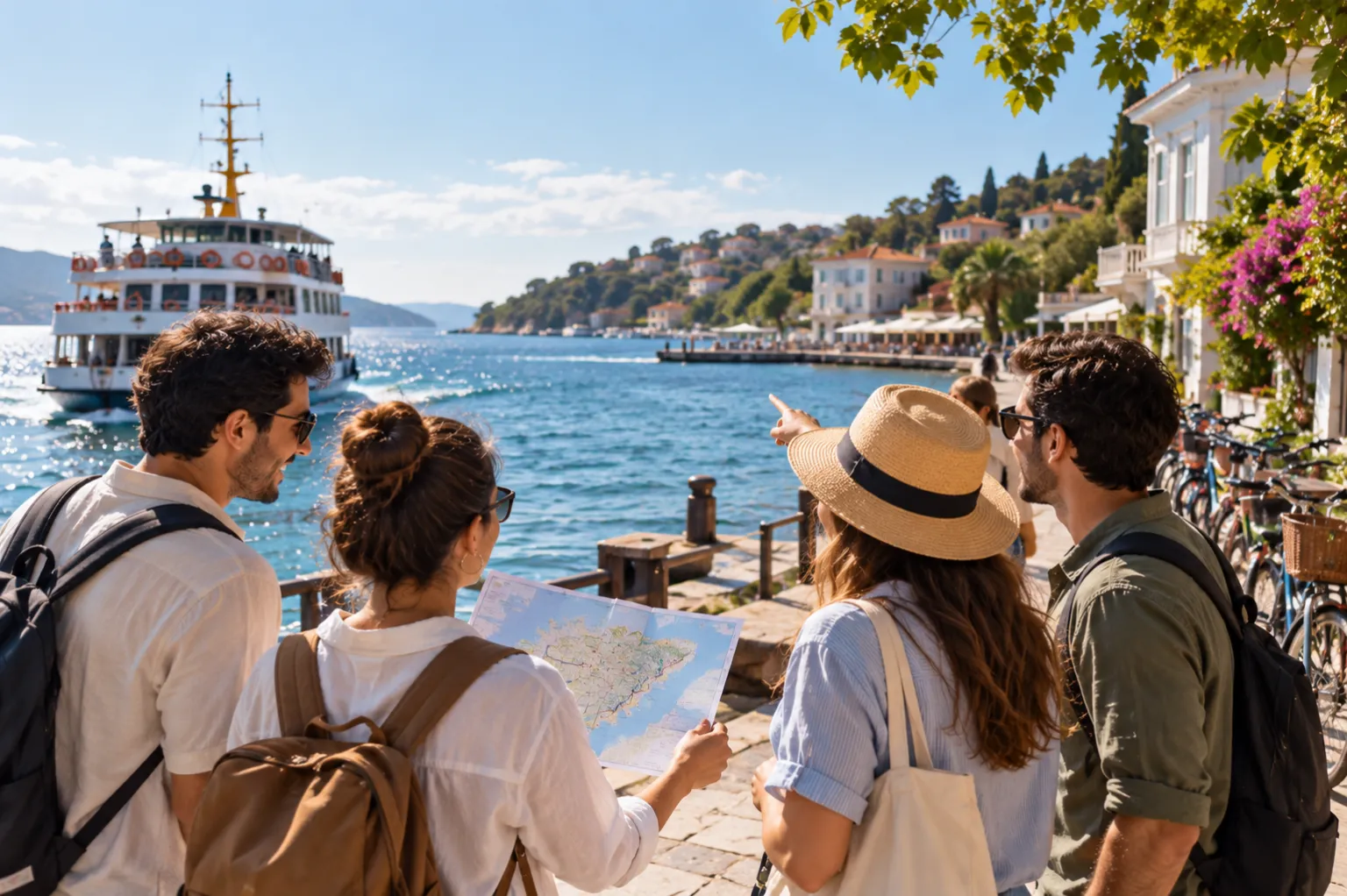
A public ferry line serves the Golden Horn and calls at piers along both shores. It is useful both as transport between neighbourhoods and as a short scenic break. If you build a stage of your programme around it, make the timetable the backbone of the plan and give everyone written instructions for what to do if they miss a sailing.
Half-day and full-day plans
| Plan | Morning | Lunch | Afternoon | Best for |
|---|---|---|---|---|
| Half day – neighbourhoods | Balat–Fener walk or the Golden Horn treasure hunt | Waterside lunch | — | Before or after a meeting day |
| Half day – water | Rowing on the Golden Horn | Light refreshments at the club | — | Teams working on rhythm and communication |
| Full day – water and land | Rowing on the Golden Horn | Lunch in Fener or Balat | Treasure hunt with a Pierre Loti finale by cable car | International teams, reward days |
| Full day – land and sea | Treasure hunt or an Old Town programme | Lunch in Karaköy | Golden Horn departure, sailing on the Bosphorus | April–October; groups staying in the historic centre |
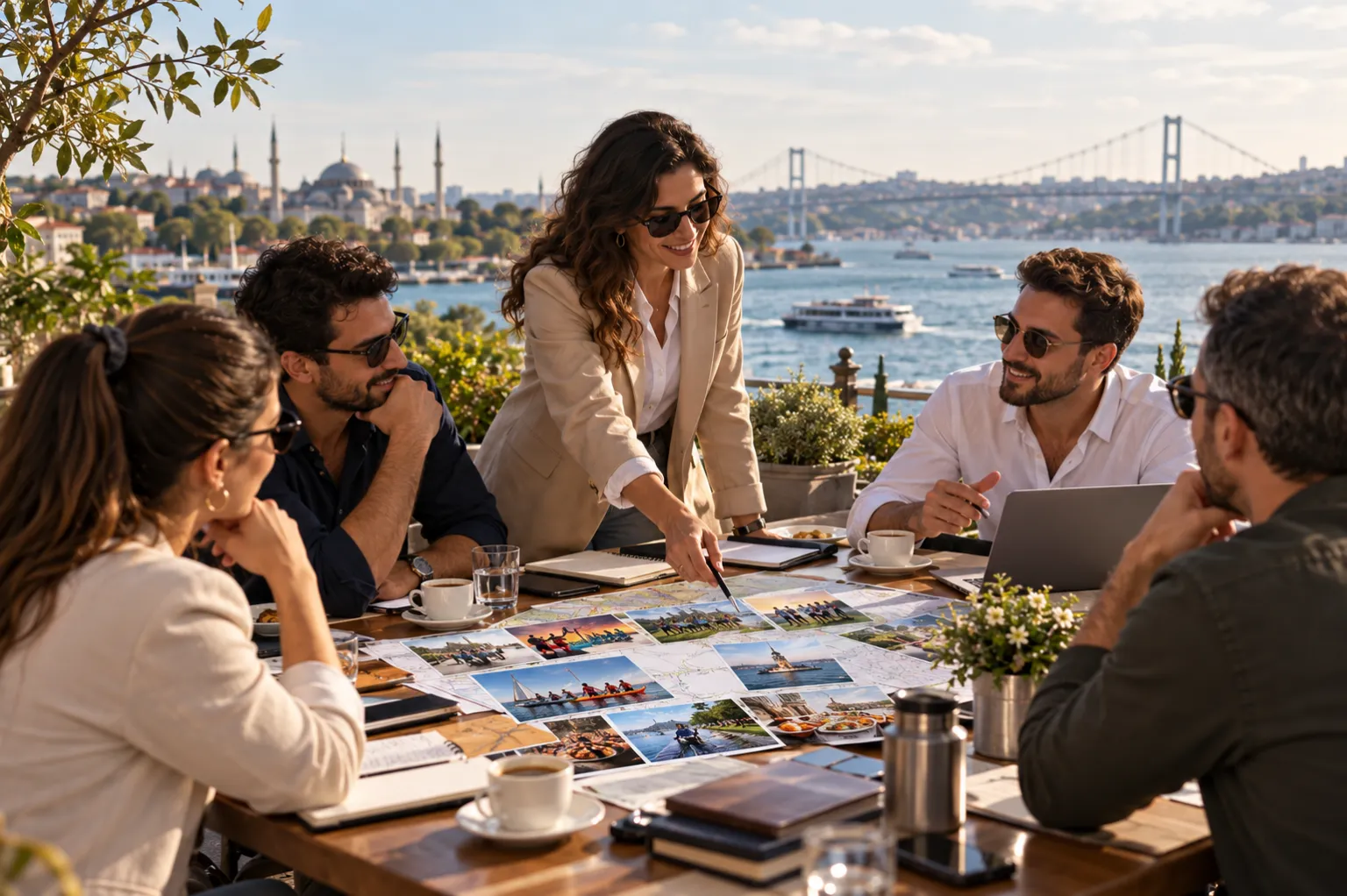
The water-and-land day works particularly well because the morning and afternoon share a setting: teams spot from the boats the streets they will later race through, and point out from the hilltop the stretch of water they rowed a few hours earlier.
Season, day and weather
- Spring and autumn are the best seasons. In summer the slopes are hard work; start in the morning or late afternoon.
- Weekdays are far calmer than weekends, when Balat’s colourful streets draw large crowds.
- Friday midday is busy around Eyüp; move the finale to another time or place.
- On a rainy day, shorten the Balat–Fener stage, add an indoor refreshment stop and give more weight to the cable car and the hilltop.
To see how the Golden Horn compares with other options month by month, read our season-by-season guide to team activities in Istanbul.
Notes for teams coming from abroad
For groups staying in the Old Town, Karaköy or along the Golden Horn shore, this is one of the shortest-transfer programmes in Istanbul. Groups landing at Istanbul Airport arrive along the European side; those landing at Sabiha Gökçen cross one of the Bosphorus bridges. Send a dress note before arrival: comfortable shoes for the hills and, for Eyüp, clothing that covers shoulders and knees, with a headscarf for women entering the mosque area. Briefings and guidance can be delivered in English, and our page on corporate sports events in Turkey for international teams explains how we handle transfers, accommodation and the wider programme.
Conclusion: The Golden Horn for Corporate Groups
The Golden Horn rewards groups that put the water and the neighbourhoods into the same day: the rhythm of a rowing boat in the morning, the detail of the streets in the afternoon and the whole inlet laid out below the hilltop at the end. If sailing is on the wish list, meet on the Golden Horn and sail on the Bosphorus. Send your dates, group size and hotel area through the quote request form and we will propose a programme with neighbourhood rules and a weather back-up built in.
Leave a Comment