Overview
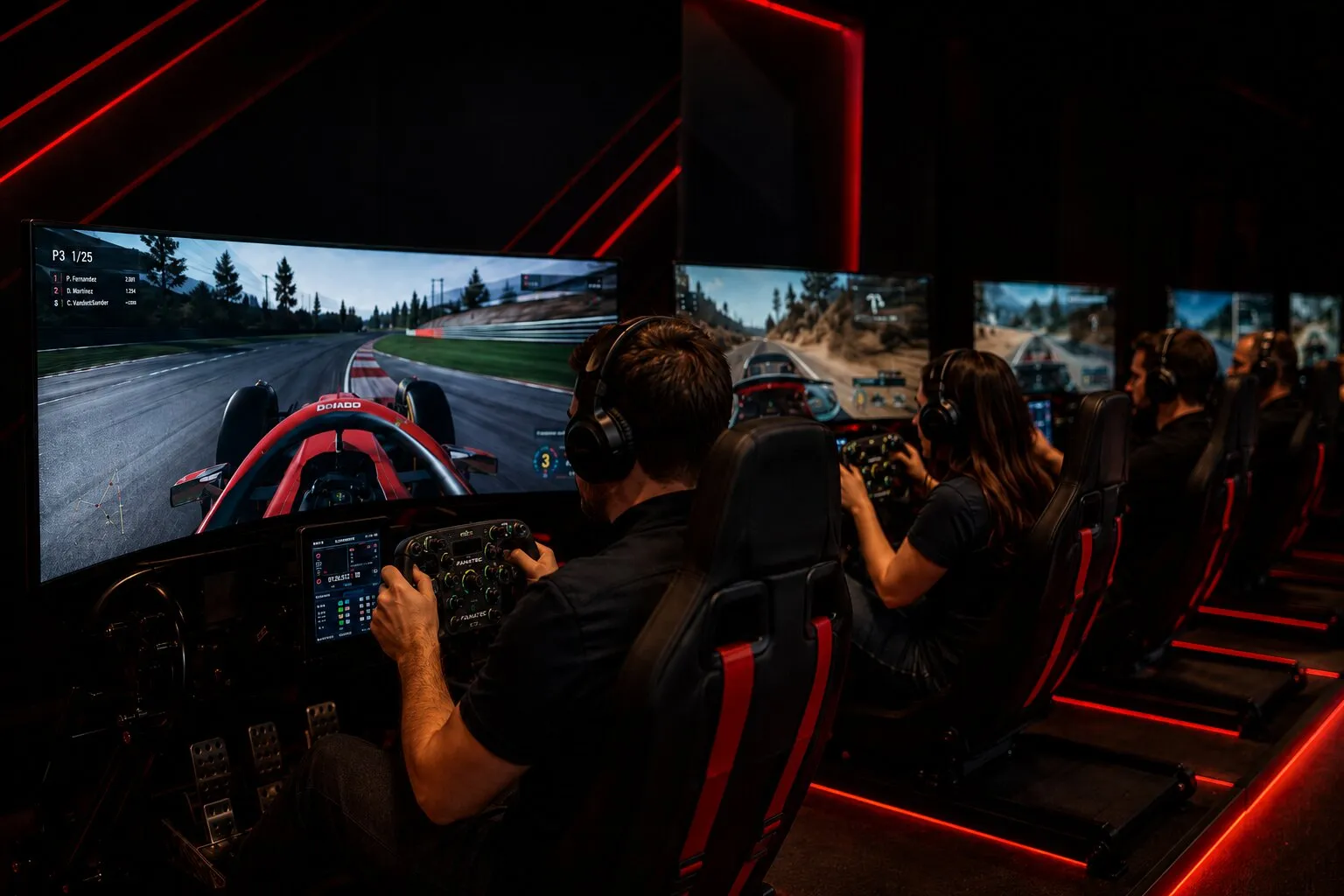
A flight simulator experience puts the participant inside a real cockpit layout: the same arrangement, the same switches, the same displays. An instructor sits in the adjacent seat and the participant attempts a take-off, a short cruise and a landing.
Why it works with a corporate group
- No physical demand. Age, fitness and mobility are not decisive; it is done seated.
- Short sessions. 15-30 minutes per person, which fits flexibly into a programme.
- Weather independent. The cancellation risk of real flying activities does not exist here.
- High narrative value. Participants describe the experience in detail afterwards; the landing attempt is usually the moment of the day that gets talked about.
The inclusive option in an adventure programme
Where a programme includes paragliding or a balloon flight, there will be colleagues who cannot or will not do either — for health reasons, or because they simply do not want to. This gives them the same subject matter without the exposure, in a room, seated, with an instructor beside them. Planning it alongside rather than instead of the real flight is what keeps an adventure-heavy programme from quietly splitting the group in two.
The capacity constraint
One participant is in the simulator at a time. This is the defining limit of the format: a single simulator is not enough for a group of 100. For larger groups several units are installed, or the simulator is planned as one station within a wider event — everyone takes a turn while the others are at other stations.
Setup
It can be run at a fixed simulator centre, or portable cockpit units can be installed at an office or event venue. An office installation needs roughly 3x4 metres and a power connection.
Who it suits
It attracts high interest in aviation, technology and engineering teams, and among staff who cannot take part in physical activity. It is also built as a stand station at launches and trade fairs.
Operational Safety, Equipment & Field Protocols
Employee safety is paramount across all our team building and sports experience operations. All technical gear (including CE and UIAA-certified helmets, harnesses, life vests, radios, or racing systems) meets stringent international safety benchmarks. Courses are facilitated by licensed instructors, federation trainers, and certified outdoor guides. Prior to activity commencement, comprehensive safety briefings are delivered, with certified first-aid paramedics stationed on site.
Included Services in the Experience Package
- Complete Equipment Allocation: Professional technical gear, personal protective equipment (PPE), and branded team accessories tailored to the sport.
- Master Instructors & Facilitators: Bilingual professional team coaches guiding participants according to experience level and corporate goals.
- Venue & Logistics Management: Private reserved grounds, permitted trails or waterfront launches, with private changing and rest areas.
- Media & Commemorative Awards: 4K photography, video highlight edits, personalized achievement certificates, and custom team medals.
- Hydration & Healthy Refreshments: Continuous beverage bars with chilled/warm refreshments, fresh fruits, and artisanal healthy snacks.
Customized Adaptation by Team Demographics
Every program is tailored to your team's age profile, physical readiness, and strategic objectives (such as cross-silo trust, problem solving, or decompression). Progressive difficulty tracks ensure even first-time beginners participate with confidence. Accommodating intimate executive offsites of 15 leaders up to company-wide festivals of 300+ delegates, simultaneous squad rotations guarantee seamless engagement.
RFP Quotation & Booking Guarantee (TÜRSAB A-12558)
All operations are backed by our TÜRSAB Group A-12558 licensed corporate travel agency accreditation. Share your expected headcount, date window, and add-on preferences (executive VIP shuttles, outdoor banquets, or luxury resort accommodation), and we deliver your official formal proposal within 24 hours. Direct corporate billing is supported in USD, EUR, or TRY for global clients.