

Should the same budget go into one day or a programme spread across the year? A comparison of both models and when each is right.
You have an annual events budget and a decision to make between two options:
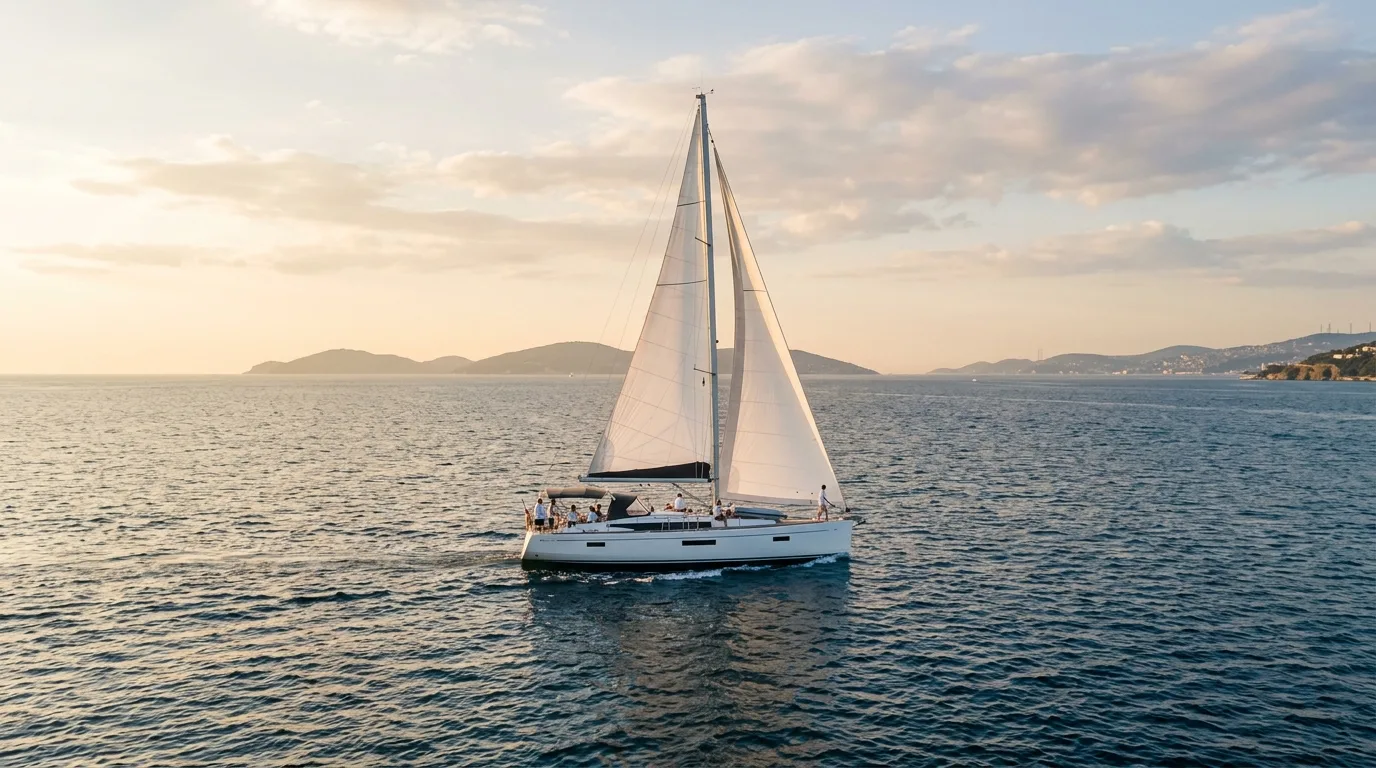
- A: Spend all of it on one large day — a sports festival for 150, an overnight retreat or a sailing regatta
- B: Spread the same budget across the year — a weekly office programme, a 10-week league, a few smaller events
Most companies pick A without examination, because a single event is visible, photographable and can be declared done. But the two models produce entirely different things.
What each model produces
| One large event | Annual programme | |
|---|---|---|
| Produces | A shared memory, a day to talk about | A habit, an ongoing relationship |
| Attendance | High in one go (60–85%) | Low per session, broad in total |
| Who it reaches | Whoever is free that day | A much wider group over time |
| Visibility | High — photos, internal comms | Low — but continuous |
| Measurability | Attendance plus survey | Retention plus engagement survey |
| Risk | Weather, date clashes, single point of failure | Low — one empty session has limited effect |
| New joiners | Excluded until next year | Included within weeks |
That last row is missed in most companies. In a company that runs one event a year, an employee who joins a week after it sees no shared event for 11 months. In a company growing 20% a year, that means a fifth of the team falls outside the scope.
The cost-per-head fallacy
The argument most often used to defend a single event is: "We reach 150 people in one day, so cost per head is low."
That calculation is incomplete in two ways:
- The denominator is wrong. It should be divided by those who attended, not those invited. At 65% attendance, real cost per head is about 1.5 times the calculated figure.
- Contact count is ignored. An annual programme touches the same person 20–40 times. Look at cost per contact instead of cost per head and the picture reverses.
The annual programme also has a hidden cost advantage: there is no transport or venue line. A weekly in-office session costs almost entirely instructor-hours, whereas in a single large event a significant share of the budget goes to transport, venue and catering.
When is a single event right?
One large event is the right choice when:
- A specific occasion has to be marked — a merger, the completion of a major project, a company anniversary
- The team is geographically dispersed — teams in different cities can only gather physically on one day
- The team is small and already close — in a team of 25 with no bonding problem, an ongoing programme adds little
- The goal is internal comms and employer brand — visual content production is markedly stronger at a single event
When is an annual programme right?
- You are growing fast — with constant new joiners, one day a year cannot cover them
- There is a split between departments — that is not solved in a day; it needs repetition
- Desk-bound work and physical complaints — a programme targeting back and neck complaints has to be weekly
- You work hybrid or remote — an ongoing programme that creates a reason to come to the office is far more functional than one event
- You need to defend the budget — retention data is stronger than anything a single event can produce
What works best in practice: a hybrid
Experienced HR teams usually split the budget. A distribution that works:
| Share | For what | Why |
|---|---|---|
| ~50% | An ongoing programme across the year | Produces habit and continuity; covers new joiners |
| ~35% | One large event a year | Produces a shared memory and visibility |
| ~15% | Two or three smaller events | Fills calendar gaps and keeps momentum |
The logic is simple: the large event produces visibility, the ongoing programme produces effect. Neither substitutes for the other.
A sample annual calendar
What the hybrid looks like in practice:
- January–March: Weekly office programme (yoga / stretching) plus the start of an indoor league
- April: A smaller event — a half-day padel or bowling tournament
- May–June: The large event (sports festival, sailing regatta or obstacle race)
- July–August: Low intensity — the weekly programme continues, no large event
- September–November: An internal tournament or an inter-company league season
- December: Year end — a chair massage day plus the evaluation report
One question to decide
If you cannot decide between the two, ask this:
"What share of the people who joined this year will be able to attend our event?"
If the answer is low, you need an annual programme. If it is high (a stable team, slow growth), a single large event may be enough.
The question also helps in the budget discussion — because it is a coverage problem in language leadership understands, not an abstract debate about motivation.

Leave a Comment