
Headcount is the first variable that decides the format of a company event. What works for 20 collapses at 150. A guide to choosing by numbers.
The first question asked when planning a company event is usually "what should we do?" The right order is the opposite: say how many people there are and the options narrow on their own.
The reason is simple: every sport has a capacity unit, and multiplied by headcount it either works or it does not. A sailing day that is perfect for 20 becomes a logistical nightmare for 120.
Understanding the capacity unit
Every event format is defined by how many people it can occupy at once:
| Format | Capacity unit | People per unit |
|---|---|---|
| Padel, pickleball, tennis | Court-hour | 4–12 |
| Table tennis | Table | 6–10 |
| Bowling | Lane | 5–6 |
| Five-a-side football | Pitch | 14–16 |
| Sailing | Boat-day | 6–12 |
| Paintball / airsoft | Field (rotating) | 10–20 at a time |
| Go-kart | Kart / session | 8–12 at a time |
| In-office workshop | Instructor | 12–30 |
| Obstacle course | Course | 30–150 (in teams) |
Divide your headcount by that unit and you get the number of units required — which is the budget.
20–30 people: almost anything is possible
This is the most flexible range. No high-capacity logistics are needed and niche formats open up:
- Sports with low unit capacity such as sailing, diving and paragliding
- Formats like squash that take two people per court
- Equipment-limited workshops such as aerial yoga
- Overnight retreats and camps
In this range the real decision is not budget but team profile: fitness spread, age range and appetite for adventure.
50 people: where thresholds begin
Fifty is the point at which most formats need a "second unit": 4–5 courts, 3–4 boats, 2 coaches. From here the budget rises in blocks rather than per person.
What works well in this range:
- A padel or pickleball day (4–6 courts, rotating)
- A five-a-side tournament (3–4 pitches)
- A scenario-based paintball or airsoft team event
- A cycling tour with pace groups
- A bowling tournament (8–10 lanes)
Watch out: 50 people do not fit on one sailing boat or into a single go-kart session. At this size those formats go into rotation, and rotation means participants spend part of the day waiting. A second activity must be planned to fill it.
100 people: rotation becomes mandatory
At 100 people a single-activity structure works in almost no sport. The right structure is station rotation: the group splits into 5–6 teams that move between stations, with a total score at the end of the day.
Structures that work for 100:
- Sports festival / olympics: 6–8 stations, team rotation, a scoreboard
- Obstacle race: One course run in teams; one of the highest-capacity formats
- Multi-court padel or pickleball day: 8–10 courts required
- Five-a-side tournament: 6–8 pitches or a fixture list over two days
- Snow or beach olympics: Station design by season
At this scale an alternative programme for those who do not take part must be defined. In a group of 100 there are always 15–20 people who would rather not join the activity; if there is nothing for them they stay at the hotel or on the sidelines and the day goes badly for them.
200+: this is no longer an event but an operation
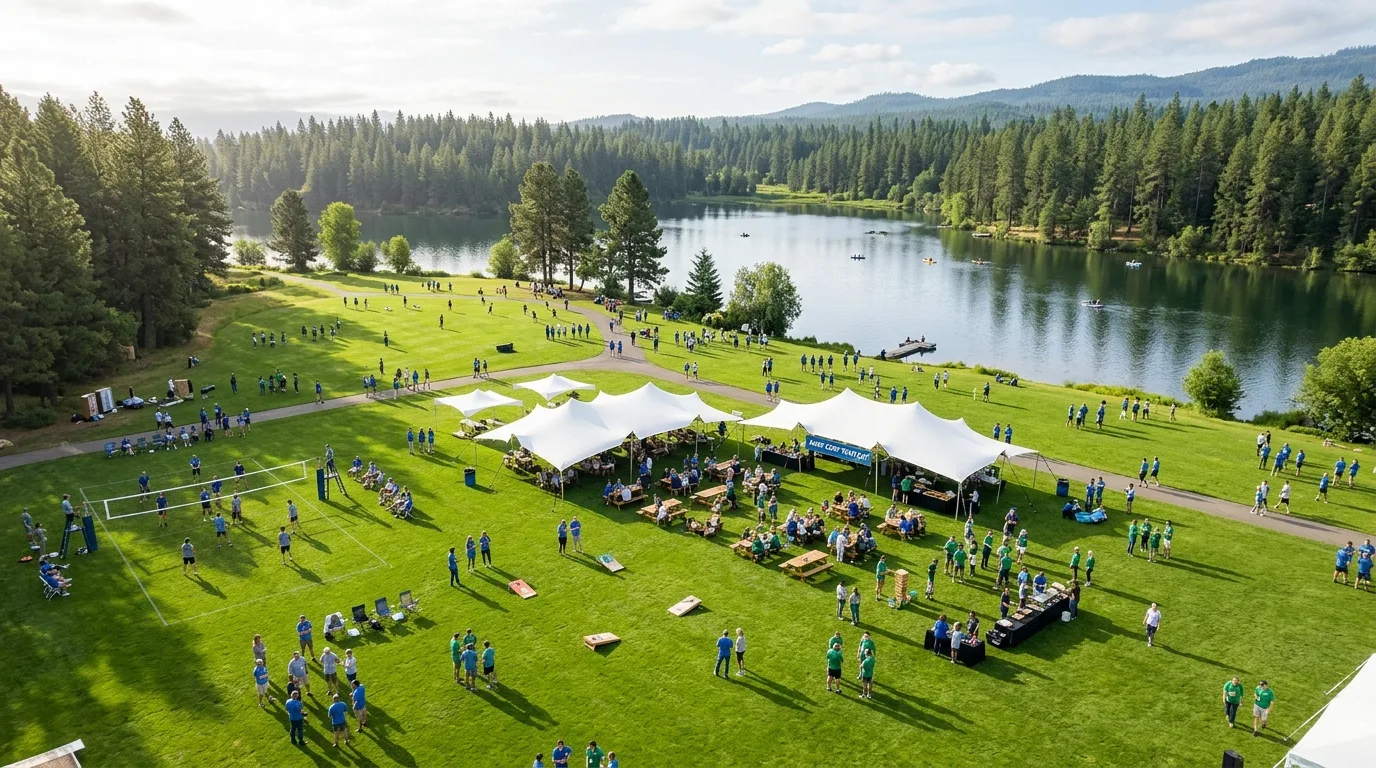
Above 200 people, sport stops being the centre of the day and becomes a component. The right frame is a "company sports day" or "family day":
- Parallel stations (6–10 activities running at once)
- A stage, PA system and central scoreboard
- Food and drink areas and rest zones
- A separate area for family and children
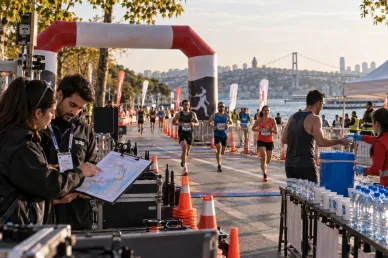
- Registration, badges and a wayfinding system
The most common mistake at this scale is planning a 50-person event multiplied by four. Two hundred people is a different operation: without a registration desk, wayfinding, a timetable and announcements, the group disperses.
From headcount to format: a quick decision table
| People | Works best | Avoid |
|---|---|---|
| 10–30 | Sailing, diving, retreats, squash, aerial yoga | Station rotation (needless complexity) |
| 30–60 | Padel/pickleball day, paintball, five-a-side, cycling | Single-boat or single-session formats |
| 60–120 | Sports festival, obstacle race, multi-pitch tournament | A single-activity day |
| 120+ | Company sports day, family day, parallel stations | Out-of-town overnight programmes (logistics risk) |
One last note: give a range, not an exact number
When requesting a quote, "between 55 and 70" helps more than "about 60". If the organising team knows the range they plan capacity at the right threshold; give an exact number and add 15 people later and you either pay for a second unit or dilute the experience.

Leave a Comment